Understanding Emotional Dysregulation in Kids
One second, your child is fine. Four seconds later, they are on the floor, shrieking, undone by a sock seam or the wrong cup or the simple request to put their shoes on. What gets under your skin is not only the noise. It is the speed. How does a genuine feeling rocket from zero to total collapse in the time it takes to pour a glass of milk? A reaction that fast, that far out of scale with its cause, has a way of looking staged. Chosen. Aimed at you.
That impression is the trap, and almost every parent falls into it. When emotional dysregulation shows up as instant, wildly disproportionate meltdowns, our gut reads it as a decision the child is making, a bid for control or attention that they could switch off if they cared to. But the speed and the size, the exact features that make it look deliberate, are the strongest evidence that it is not. A chosen reaction is slower and more strategic than this. What you are watching is a child who has lost the ability to steer, not one who is steering you. Grasping that difference changes everything about what helps, and it lifts a heavy layer of resentment out of the hardest moments of the day.
The Difference Between Can't and Won't
Nearly every conflict over a child's big feelings comes down to a single question, usually asked without words: is my child unable to handle this, or unwilling? We answer it in a blink, and we tend to answer wrong, because dysregulation is a champion at impersonating defiance. A meltdown over something trivial insults our sense of proportion. Surely no real distress works that way. Surely they are laying it on.
Look closer at the mechanics, though. Managing a strong feeling is a mental task, and it depends on the thinking, deciding part of the brain, the part that weighs a situation and picks a sensible response. That machinery is slow to mature in children and slower still to come online once a feeling has already fired. So in a young child, the surge of anger or panic frequently arrives before the part that could tap the brakes has even woken up. The feeling wins the race. This is why the flip is so fast: there is no deliberation in it, because deliberation is precisely the thing that has gone dark. A child in that state is not weighing options and choosing the tantrum. They have, for the moment, lost access to the equipment choice would require.
Seen this way, the very things that made it look like a won't - the speed, the size, the seeming irrationality - are the fingerprints of a can't. Real strategy is calculated and controllable. A four-second detonation over a sock is neither. It is a child whose feelings have outrun their ability to manage them, which is the plain definition of dysregulation, and which has nothing to do with how much they care or how hard they are trying.
Why "Just Calm Down" Never Lands
Once you see that the child's steering has cut out, a familiar frustration finally makes sense. In the thick of a meltdown, we reason, we explain, we instruct: take a breath, use your words, this is not a big deal, calm down. And it does nothing, or it pours fuel on the fire. That failure is not a sign you are saying it wrong. It is baked into the situation.
Every one of those tools: breathing on cue, talking it out, seeing reason - runs on the thinking brain, and the thinking brain is the exact part that has stepped offline. Asking a mid-meltdown child to reason their way to calm is like asking someone to read the manual while the power is out. The capacity you are appealing to is temporarily unavailable, which is why the appeal bounces. What a child in that spot can still register is something much simpler than words: whether the person beside them is steady. A calm, unhurried adult who stays close, keeps their voice low, names the state rather than the behaviour with something like "this feels too big right now," and stops trying to teach in the moment, gives the child's overloaded system something safe to sync back up with. Settling comes first. The lesson, if there is one, can wait until the lights are back on.
This also reframes where the real work happens. You do not build a child's ability to cope during the meltdown; you build it everywhere else. Practising small resets on ordinary days, when nothing is on fire, lets a child rehearse skills without pressure. Predictable routines shrink the number of surprises that set them off. Sensory supports, movement, deep pressure, a fidget, a quiet corner, give an overloaded body a way back toward balance, especially when paired with a steady person rather than handed over as a fix. None of that works in the four seconds of collapse. All of it works in the hours around it.
Matching the Help to the Problem
Treating a can't as a won't does not just miss the mark; it makes things worse. Meeting a skill gap with consequences and demands to stop teaches a child that they are in trouble for something they could not control, which piles shame onto an already hard moment and does nothing to build the ability they are missing. It is a bit like punishing a kid for not yet being able to read. The behaviour looks like refusal, but the fix for a missing skill is never a stiffer penalty. It is patient instruction and support until the skill grows in.
Children do grow this capacity, gradually, as their brains mature and as they get thousands of small chances to practise handling feelings with a grounded adult alongside them. Some kids get there sooner, some later, and some, including many with attention or sensory differences, need more support and more time than their peers. What speeds it along is not tougher discipline but the opposite: safety, connection, and steady, low-stakes practice, which is also the heart of why play-based therapy helps, since children rehearse coping through the make-believe worlds they build long before they can do it under real pressure.
When to Reach for Extra Support
Rough patches are ordinary, and most settle with time and steadiness at home. It is worth bringing in help when the pattern digs in rather than easing. A few signals that professional support could make a difference:
Meltdowns or shutdowns happen on most days rather than here and there
Everyday routines like mornings, homework, or bedtime are regularly derailed
Your child seems keyed up or on edge much of the time, not just in flashpoints
You feel stuck, unsure how to respond without the moment escalating
Home life is starting to revolve around managing the next blowup
Reaching out early is a forward-looking move, not a last resort. Professional support gives your child a place to build the coping skills that are still forming, and gives you an approach shaped around your particular family rather than generic advice. Plenty of households cycle through the same overwhelm and self-doubt, and support can shorten the road for everyone in them.
FAQs
Is emotional dysregulation the same as misbehaviour?
No. Misbehaviour implies a choice, while dysregulation is a gap in the ability to manage strong feelings, which is why it comes on so fast and so out of proportion. A dysregulated child has temporarily lost access to the control that a chosen behaviour would require. Responding to it as willful defiance, with consequences, tends to add shame and make things worse, whereas treating it as a skill still under construction is what actually helps a child grow steadier.
Do children grow out of dysregulation?
Most children do gain far more control over their feelings as they mature and get repeated practice at coping with the support of steady adults. The timeline varies widely, and some kids, particularly those with attention or sensory differences, need more time and more help to get there. Growth tends to come from safety, connection, and low-pressure practice rather than from waiting alone, so support can meaningfully speed the process.
Do parents need to stay calm every time?
Staying steady genuinely helps, because a settled adult gives an overwhelmed child something to sync back up with, but no parent manages it in every moment, and you do not have to. What matters more than a perfect track record is the overall pattern and your willingness to reconnect after a moment you handled poorly. Repair, coming back and making things right once everyone has settled, teaches a child that relationships hold even after hard moments.
Does dysregulation mean my child has ADHD or autism?
Not on its own. Difficulty managing big feelings is common in early childhood and can simply reflect skills that are still developing. It can also accompany ADHD, autism, anxiety, or sensory differences, but it does not confirm any of them by itself. If dysregulation is intense, frequent, or paired with other things you are noticing, an assessment can clarify what is going on and point toward the right kind of support.
Steadier Ground, One Practice at a Time
The child who fell to pieces over a sock was not working an angle or testing your patience on purpose. Their feelings simply crossed the finish line before the part of them that could have slowed things down had a chance to show up. When you stop reading that speed as a choice and start treating it as a skill still being built, the daily flashpoints lose some of their sting, and your response finally fits the problem. Kids who are met this way do learn, over many ordinary days, to recognize what they are feeling and find their way back to calm, and parents find firmer footing alongside them. If you want a place where your child is understood and you feel backed up as a parent, reach out, and we can find a pace that works for your family.
At Creative Sky Psychology in Calgary, we help children who struggle with emotional dysregulation build the coping skills that come with time and practice, and we support parents through the hardest moments with guidance shaped around your home. If big feelings have taken over more of your days than you would like, get in touch, and we can talk about next steps.
Until next time,
Stay positive, stay creative.
CS
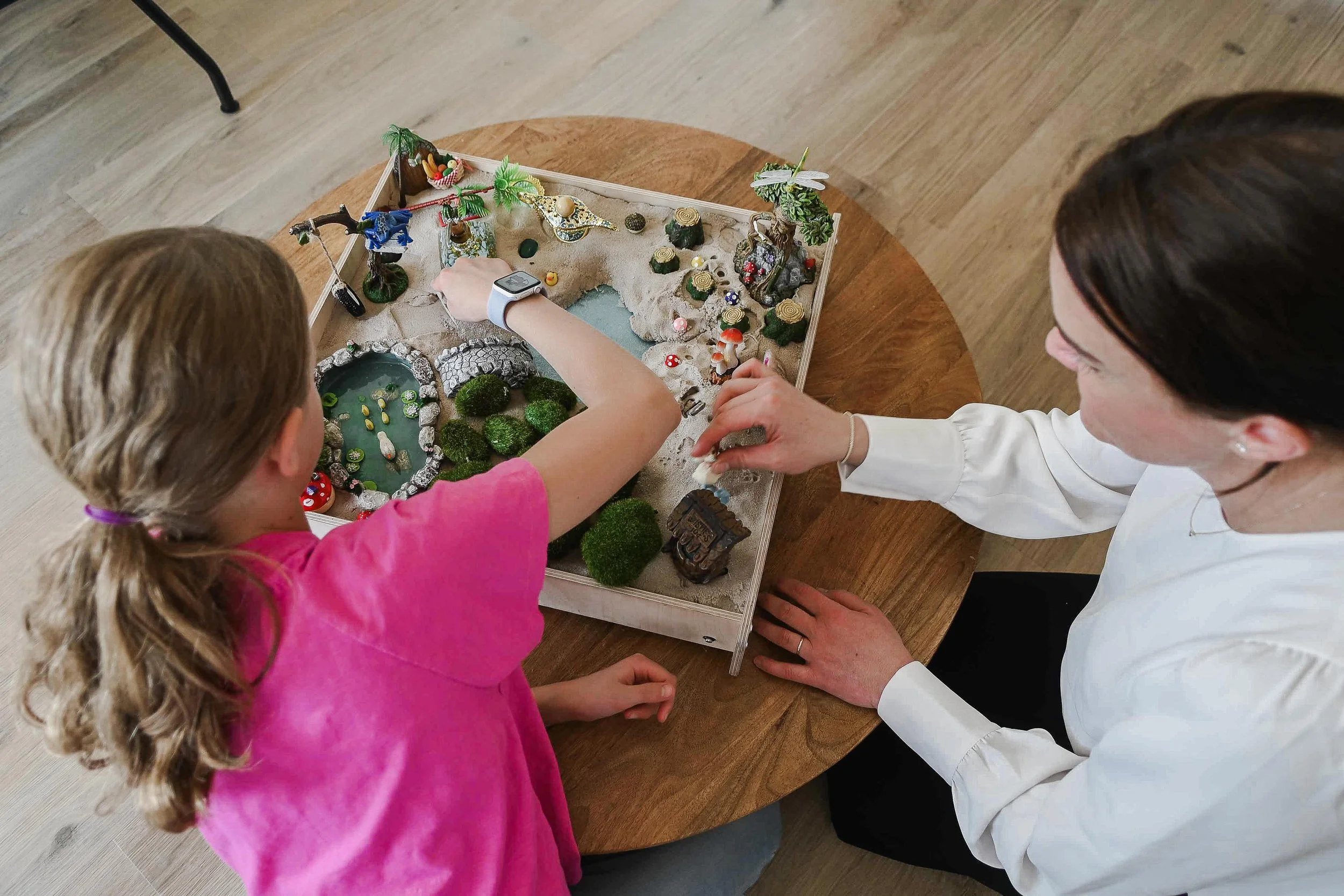
Children learn emotional regulation skills through patterned, repetitive play. When they build miniature worlds or act out stories, their brain rehearses coping strategies without pressure, which strengthens the pathways that support regulation in real-life moments.
Support for your family starts here.
Our Team
Meet Our Calgary Child Psychologists
Behind every session is a team of warm, specialized psychologists who work only with children, teens, and families. Find the one who feels like the right fit for yours.