
Child Anxiety Therapy in Calgary
Helping Children Worry Less And Live More.
Anxiety can make everyday life feel overwhelming for children and teens. Racing thoughts, physical symptoms, avoidance, meltdowns, and constant worry can become exhausting for both children and their families. At Creative Sky Psychology, our Calgary child psychologists provide specialized, evidence-based anxiety therapy that helps children understand what they're experiencing and gradually regain confidence, flexibility, and a sense of calm.
Using approaches such as Cognitive Behavioural Therapy (CBT), Exposure Therapy, and collaborative parent support, we tailor therapy to your child's developmental stage, strengths, and goals. Every child experiences anxiety differently, which is why treatment is always personalized and designed to help families move forward together.

Understanding Anxiety
What Is Childhood Anxiety?
Anxiety is the body's natural alarm system, but for some children that alarm goes off too often, too intensely, or in situations that are not actually dangerous. Children with anxiety may experience persistent worry, physical discomfort, and a strong urge to escape, avoid, or seek certainty.
For children with anxiety, worry can feel completely real and urgent, even when adults can see that the situation is safe. While avoidance and reassurance may bring temporary relief, they can also teach the brain that the feared situation really was dangerous, making anxiety stronger over time.
The Anxiety Alarm
Why worry can feel so convincing.Anxiety starts as a protective response. When a child's brain senses possible danger, the body prepares to react quickly, even when the threat is imagined, unlikely, or bigger in their mind than in real life.
- The brain scans for danger or uncertainty
- Small concerns can start to feel urgent
- The body responds with discomfort or tension
- Worried thoughts become harder to dismiss
- The child feels pulled toward safety or reassurance
- Everyday situations can begin to feel threatening
The Anxiety Cycle
Why anxiety can grow over time.When children avoid something scary or receive repeated reassurance, they often feel better for a short time. But the brain can learn that avoidance was necessary, which makes the fear more likely to return.
- A worry or uncomfortable feeling appears
- Anxiety rises and feels difficult to tolerate
- The child avoids, escapes, or seeks reassurance
- Relief happens quickly but does not last
- The brain treats the situation as dangerous
- The cycle repeats and confidence becomes smaller
Anxiety is a learned alarm pattern that can be understood and changed. With evidence-based therapy, children can learn to tolerate uncertainty, respond differently to worry, reduce avoidance, and build confidence in their ability to handle hard moments.
Common Signs of Anxiety
Signs of Anxiety Can Look Different in Every Child.
Children experience anxiety in many different ways. While some fears and worries are a normal part of development, anxiety begins to interfere with daily life when fear and avoidance become difficult to control.
Persistent Worry
Ongoing worries about school, safety, health, or the future that feel difficult to control, even when children know their fears may be unlikely.
Physical Symptoms
Stomachaches, headaches, nausea, muscle tension, or fatigue that appear without a medical cause, often tied to worry or stress.
Avoidance
Avoiding school, social situations, activities, or new experiences that trigger fear, which can shrink a child's world over time.
Separation Difficulties
Distress at drop-off, difficulty being away from parents, or clinginess that goes beyond typical age-related separation worries.
Reassurance Seeking
Repeatedly asking parents, teachers, or loved ones for reassurance, even after receiving an answer, because the worry quickly returns.
Meltdowns & Irritability
Sudden emotional outbursts, irritability, or shutting down under pressure when anxiety becomes too overwhelming to manage.
Age-Specific Anxiety Therapy
Anxiety Looks Different at Every Age
A worried four-year-old and an overwhelmed fifteen-year-old need very different kinds of support, so our Calgary child psychologists tailor anxiety therapy to your child's age and stage. It's worth reaching out when worry starts getting in the way — when it's disrupting sleep, school, friendships, or family life, when your child avoids things they once enjoyed, or when the whole household has begun arranging itself around preventing anxious moments. Early support gives children tools that last, and it's rarely too soon to ask.
Preschoolers
Ages 3–5
At this age, anxiety often shows up as clinginess, separation distress, big meltdowns, or bedtime fears. We use gentle play therapy and attachment-based strategies to help little ones feel safe, and we coach parents on easing over-accommodation and building steady, reassuring routines.
School-Age Children
Ages 6–12
Worry at this stage can look like perfectionism, endless "what if" questions, tummy aches, or avoiding school. We help children name anxious thoughts and build real coping tools, blending CBT with play and creative work so brave, flexible thinking feels achievable rather than forced.
Teens
Ages 13–17
Teen anxiety often surfaces as social fear, panic attacks, or burnout from pressure to succeed. Our Calgary teen psychologists draw on CBT, ACT, and narrative therapy to help adolescents manage stress, quiet self-criticism, and feel more like themselves again.
What to Expect
What Anxiety Therapy Actually Looks Like
If you've never brought your child to a psychologist before, not knowing what happens can feel like the hardest part. Here's the truth: it's gentler than most parents expect. There's no couch, no pressure, and nothing your child has to say or do "right." Here's how anxiety therapy usually unfolds at our Calgary clinic.
A Relaxed First Session
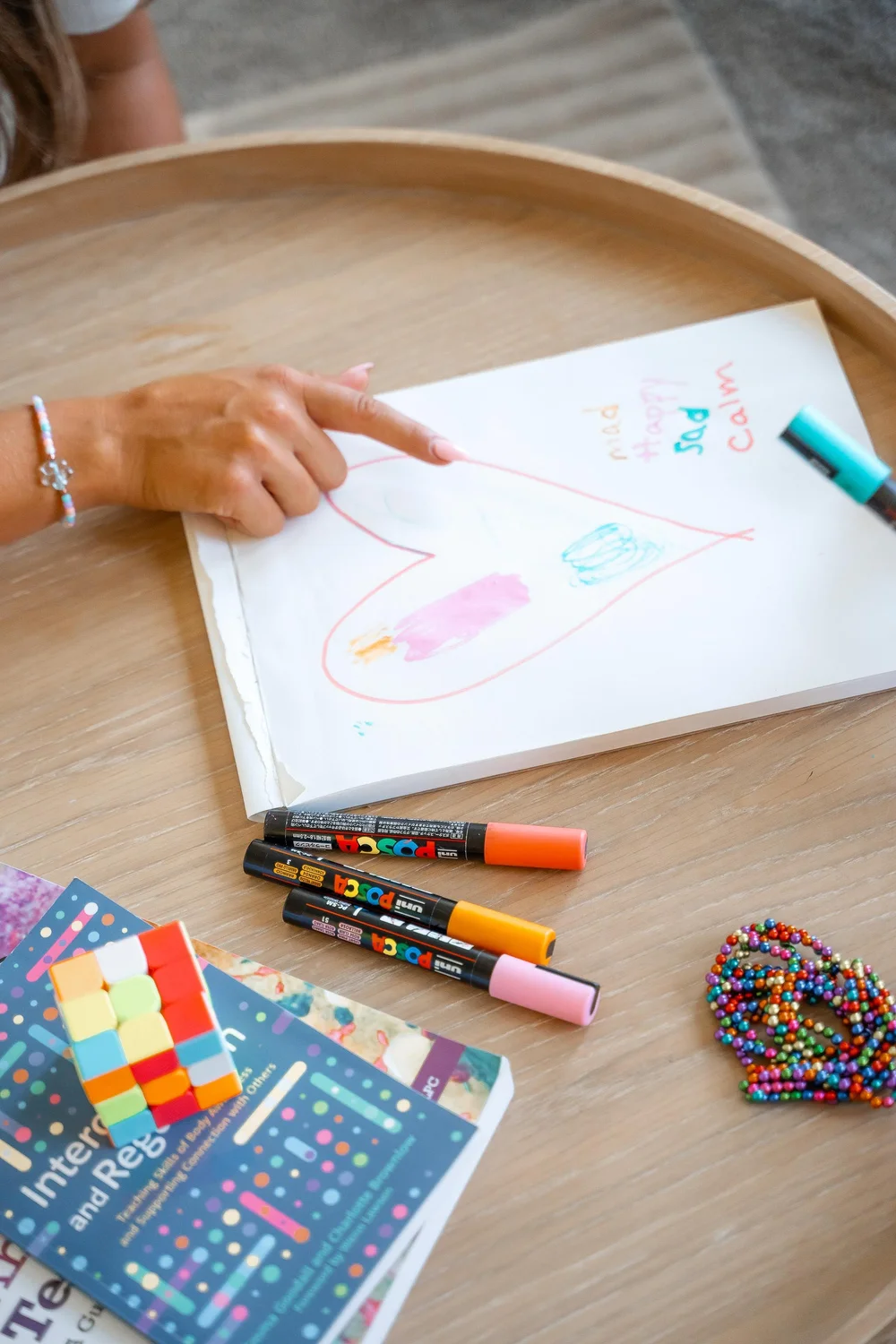
The first meeting is simply about getting to know your child and what's been hard — through play, conversation, and warmth, not a formal interview. Nothing is decided or pushed on the spot. Most children relax far faster than their parents expect once they realize they're not in trouble.
A Plan Built Around Your Child
From there, your psychologist shapes an approach that fits your child's age, personality, and the shape of their anxiety — drawing on play, CBT, ACT, and creative work. You'll understand what we're doing and why, and we'll move at a pace that feels right for your family.
Building Brave Skills, Gently
Session by session, your child learns to notice anxious thoughts, calm their body, and face fears in small, manageable steps rather than all at once. We keep it engaging and age-appropriate, and we share tools with you so the progress carries over to home and school.
Progress You Can See
Over time, worry loosens its grip — sleep improves, avoidance shrinks, confidence returns. We check in with you regularly about how things are going, and we're honest when your child is ready to finish. The goal is always for them to need us less, not more.
How We Help
How Anxiety Therapy Helps Children Regain Confidence.
Anxiety can make children feel trapped in a cycle of worry and avoidance. Rather than asking children to simply "stop worrying," effective anxiety therapy helps them understand why the cycle happens and gradually develop the confidence to respond differently.
At Creative Sky Psychology, our Calgary child psychologists use evidence-based approaches such as Cognitive Behavioural Therapy (CBT), Exposure Therapy, and parent collaboration to help children reduce anxiety, build resilience, and feel more in control of everyday life.
- Understand how anxiety affects thoughts, feelings, and behaviours.
- Build confidence facing feared situations without relying on avoidance.
- Reduce reassurance-seeking, avoidance, and physical symptoms of worry.
- Learn practical coping strategies that can be used at home, school, and in daily life.
- Develop greater flexibility, independence, and emotional resilience.
- Equip parents with tools to confidently support progress outside of therapy.
Anxiety Therapy in Calgary & Across Alberta
Supporting Families Throughout Calgary and Beyond
Creative Sky Psychology offers in-person child anxiety therapy from our Calgary office, along with secure online therapy for families across Alberta. Wherever you're located, our child psychologists work with you to build a plan that fits your child's needs, your family's schedule, and your comfort level with in-person or virtual care.
Neighbourhoods We Serve
- Aspen Woods
- West Springs
- Cougar Ridge
- Springbank Hill
- Wildwood
- Glenbrook
- Glendale
- Westgate
- Mount Royal
- Royal Oak
Online Therapy Across Alberta
For families outside of Calgary, or those who simply prefer the convenience of meeting from home, we offer secure virtual therapy sessions to clients throughout Alberta. Online therapy allows your child to receive the same thoughtful, evidence-informed care in a space where they already feel comfortable.
Explore All Areas We ServeUnderstanding Your Child
Not Sure Whether It's Anxiety, ADHD, or Something Else?
Anxiety symptoms in children can sometimes overlap with ADHD, autism, sensory sensitivities, learning differences, or other emotional and behavioural challenges. A child psychological assessment in Calgary can help families better understand what may be driving worry, avoidance, physical symptoms, or big feelings — and what kind of support may fit best.
Our Anxiety Specialists
Psychologists Who Support Children With Anxiety
Our Calgary child psychologists provide specialized support for anxiety, worry, avoidance, panic, separation difficulties, reassurance-seeking, and parent coaching.
View All PsychologistsAccepting New Clients
Kirby Rees
Registered Provisional Psychologist
Anxiety • School-Related Worry • Ages 3–10
VIEW PROFILE →Accepting New Clients
Whitney Lodge
Registered Psychologist
Anxiety • Emotional Regulation • Children & Teens
VIEW PROFILE →Accepting New Clients
Danielle Nicholson
Registered Psychologist
Child Anxiety • Separation & Social • Exposure/ERP
VIEW PROFILE →Accepting New Clients
Jennifer Hawkins
Registered Psychologist
Separation Anxiety • Phobias & Panic • Preschoolers
VIEW PROFILE →Resource Library
Helpful Articles
Learn more about child anxiety, worry, avoidance, perfectionism, school stress, panic symptoms, and evidence-based anxiety therapy for children and teens in Calgary.
View Our BlogChild Anxiety Therapy FAQs.
Is My Child's Anxiety Normal, or Something to Be Concerned About?
What's the Difference Between Shyness and Social Anxiety?
Should I Push My Child to Face Their Fears, or Let Them Avoid?
Could My Child's Stomachaches or Headaches Be Caused by Anxiety?
Will My Child Need Medication for Anxiety?
What Can I Do at Home to Help My Anxious Child?
Can Childhood Anxiety Go Away on Its Own, or Does It Need Treatment?
How Involved Will I Be in My Child's Anxiety Therapy?

Take the First Step
Ready to Help Your Child Worry Less?
If anxiety is making everyday life feel harder for your child, you do not have to figure it out alone. Our Calgary child psychologists provide compassionate, evidence-based anxiety therapy for children and teens, helping families understand worry, reduce avoidance, build coping skills, and support children as they move toward more confidence, calm, and flexibility.