Gifted and Twice-Exceptional Children: The Child You Can't See on Paper
Your child speaks like someone twice their age. The vocabulary, the questions, the unexpected connections they make can leave adults a little startled. And yet school is a grind. Homework that should take twenty minutes stretches into two hours of tears. The report card comes back unremarkable, average, and when you raise your concern, the teacher reassures you that your child is doing just fine and there is nothing to worry about. But you know something is not adding up. How can a child this bright be having this hard a time and still land squarely at average, with everyone insisting there is no problem to see?
Parents of gifted and twice-exceptional children in Calgary carry this exact confusion, often for years, feeling as though they are the only ones who can see that the child in front of them does not match the child on paper. That feeling is not misplaced. Gifted and 2e children are among the most consistently misread children there are, precisely because what shows on the surface hides what is happening underneath. Understanding that mismatch, why the visible child is so often not the whole child, is the key to finally making sense of a kid who has never quite fit the explanations offered for them.
When Two Exceptionalities Cancel Each Other Out
A twice-exceptional child is one who is both gifted and has a learning, attention, or emotional difference such as dyslexia, ADHD, autism, or anxiety. The term sounds like it should make these children more visible, doubly exceptional, standing out in two directions at once. In practice, it often does the opposite, because the two exceptionalities can cancel each other out.
Here is how it happens. A gifted child with dyslexia uses their considerable intelligence to compensate, working out strategies and sheer effort that let them read at roughly grade level. Because they read at grade level, no one suspects dyslexia. But because they are only reaching grade level rather than the advanced level their intellect would otherwise reach, no one sees the giftedness either. The disability hides the giftedness, the giftedness hides the disability, and what is left on the surface is a child who looks entirely average. The school sees no problem, because on paper there isn't one. Meanwhile, the child is working twice as hard as their classmates to produce those ordinary-looking results, and no one knows.
This is why 2e children fall through every crack. They are too capable to qualify for learning support, since they are keeping up. They are not achieving visibly enough to be identified as gifted, since their difference is dragging their output down to the middle. They sit in the gap between the two systems, unseen by both, which is exactly why a parent can feel so alone in noticing that something is off. You are not imagining it. You are seeing a child whose two halves are hiding each other from everyone but you.
The Child Who Feels Secretly Stupid
The cruelest part of this dynamic plays out inside the child, and it is worth understanding because it shapes how they come to see themselves. A 2e child has direct, daily access to their own intelligence. They can feel how quickly they grasp ideas, how deeply they think, how much they understand. And yet they also experience, just as directly, how genuinely hard the ordinary work of school is for them, how much longer it takes, how much more it costs. They are living inside a contradiction: I feel so capable, and this is so hard.
Without an explanation for that contradiction, a child reaches for the only one available, and it is a devastating one. They conclude that they must not actually be smart, that the intelligence they feel must be an illusion, that something is wrong with them, that they are secretly stupid or lazy or broken. The very brightness that should be a source of confidence becomes evidence against them, because it makes the struggle inexplicable. Add to this the exhaustion of compensating all day, and the tendency of many of these children to mask their difficulties in order to fit in, and you have a child who is quietly depleted, confused about their own worth, and often anxious or perfectionistic, all while the adults around them believe everything is fine.
This is the hidden interior of the average-looking report card. The child is not average, and they are not fine. They are extraordinary and struggling at the same time, and they have been left to make sense of that on their own, usually by blaming themselves.
Smart Mind, Young Heart: When Development Is Uneven
There is a second mismatch that affects gifted children whether or not they are 2e, and it causes its own kind of misunderstanding. Gifted children typically develop asynchronously, meaning their intellectual, emotional, and social capacities grow at different rates rather than in step. A child might reason like a twelve-year-old and, in the same hour, fall apart emotionally like a five-year-old, because their thinking has raced ahead while their emotional regulation is still its actual age.
This throws everyone off, including the child. Adults hear the sophisticated vocabulary and advanced ideas and unconsciously expect the feelings to be equally mature, so when a strikingly articulate child melts down over a small frustration, it reads as immaturity, manipulation, or a behaviour problem, rather than as the normal shape of an unevenly developing mind. The child suffers doubly here too: the world expects their emotions to match their intellect, and so do they, holding themselves to an impossible standard and feeling ashamed that they cannot cope with feelings as ably as they can solve problems.
You may recognize your child in the particular blend that so often comes with this profile:
Real strengths that stand out early, including deep thinking, strong moral awareness, vivid creativity and curiosity, and a striking emotional sensitivity and empathy.
Genuine struggles that seem to contradict the strengths, such as intense frustration with limits or perceived unfairness, overwhelm from sensory or emotional input, perfectionism that resists any self-kindness, and academic underachievement caused by uneven skill development.
Neither list is the whole child, and that is exactly the point. These children are their strengths and their struggles at once, and holding both in view is what it takes to actually understand them.
What Actually Helps
Once you can see the mismatch, the path to helping becomes clearer, and it starts with seeing the whole child rather than the average-looking surface. This is where a comprehensive psychological assessment is genuinely clarifying, because it measures cognitive, emotional, and academic functioning together and can reveal both the hidden giftedness and the hidden difference that have been canceling each other out. Understanding that full profile is often a profound relief for the child, who finally has a true explanation to replace the one where they were simply stupid, and it gives schools and families a real basis for support and realistic expectations.
From there, effective support honours both sides of the child at once, rather than treating only the struggle or only the gift. In practice, that tends to include:
Feeding the mind while supporting the difference, pairing genuine intellectual challenge with executive function and learning support, so a child is neither bored nor drowning.
Tending to the emotional life, with emotional regulation strategies for the intensity, and mindfulness and self-compassion tools to ease the harsh perfectionism and self-criticism these children so often carry.
Working with the whole system, through collaboration with the child's school and parent support that helps caregivers balance advocacy with compassion, for the child and for themselves.
It is worth seeking an assessment or professional support when a bright child is struggling in ways that don't fit, when the gap between their obvious ability and their daily experience keeps widening, when perfectionism or self-criticism is taking a real toll, or when you keep being told there is no problem while your instinct says otherwise. Trusting that instinct is often what finally gets a 2e child seen. The aim throughout is to help these children understand that their complexity is not a flaw to be fixed but the actual shape of who they are, extraordinary and struggling both, and entirely worth understanding fully.
FAQs
The school says my bright child is doing fine, but I know something's wrong. Am I overreacting?
Very likely you are not. In twice-exceptional children, giftedness and a learning difference can mask each other so effectively that the child appears average and both go unnoticed, which is exactly why schools may see no problem while a parent senses one. Your view of your child across many settings is valuable data. A comprehensive assessment can uncover the full profile that grade-level performance is hiding, so trusting your instinct and seeking clarity is reasonable, not an overreaction.
How can my child be gifted if they're struggling so much in school?
Giftedness and learning or attention difficulties can coexist, and when they do, the difficulty often drags visible performance down to an average level even as the child's underlying ability is high. Such a child is frequently working far harder than peers to produce ordinary results, which is both exhausting and easy to miss. This pattern, rather than disproving giftedness, is a hallmark of the twice-exceptional profile, and an assessment can distinguish what is really going on.
My child reasons like an adult but melts down like a toddler. Why?
This usually reflects asynchronous development, which is common in gifted children whose intellectual, emotional, and social capacities grow at different rates. A child's thinking can race well ahead of their emotional regulation, so advanced reasoning and age-typical or even younger emotional reactions genuinely coexist. It is not immaturity or manipulation, and expecting the feelings to match the intellect sets an impossible standard. Support for emotional regulation, alongside intellectual challenge, helps these children thrive.
Should my gifted or 2e child be pushed harder or protected more?
Neither extreme fits, because these children need both genuine intellectual challenge and real emotional support at the same time. Pushing only for achievement ignores the struggles and the sensitivity, while protecting them from all challenge leaves their capable minds understimulated. The most helpful approach feeds the giftedness, supports the difference, and tends to the emotional life together, meeting the child at every level of their uneven development rather than only the advanced one.
When should we consider an assessment for a possibly gifted or 2e child?
It is worth considering when a clearly bright child is struggling in ways that don't add up, when there is a persistent gap between their apparent ability and their daily performance, when perfectionism, anxiety, or self-criticism is weighing on them, or when you keep being reassured there is no problem while your instinct disagrees. An assessment can reveal both strengths and challenges, replace a child's self-blame with real understanding, and guide support at home and school.
Seeing the Whole Child at Last
The bright, struggling child who somehow lands at average was never the contradiction they appeared to be. They were two real things at once, gifted and challenged, and because those two things were hiding each other, no one but you could see the whole of them. When a child like this is finally seen in full, through an accurate understanding of both their brilliance and their difficulty, everything shifts. They get to stop believing they are secretly broken and start understanding that their mind simply works in a complex, uneven, remarkable way, and that the struggle was never proof they weren't smart. Meeting a gifted or twice-exceptional child at every level of who they are is what lets them finally feel understood and grow into the fullness of what they can be.
At Creative Sky Psychology in Calgary, we specialize in understanding and supporting gifted and twice-exceptional children through comprehensive assessment and integrated, strength-based care that honours both their intellectual depth and their emotional world, alongside guidance for parents and schools. If you have long sensed that there is more to your child than the surface shows, we would be glad to help you and them see the whole picture.
Until next time,
Stay positive, stay creative.
CS
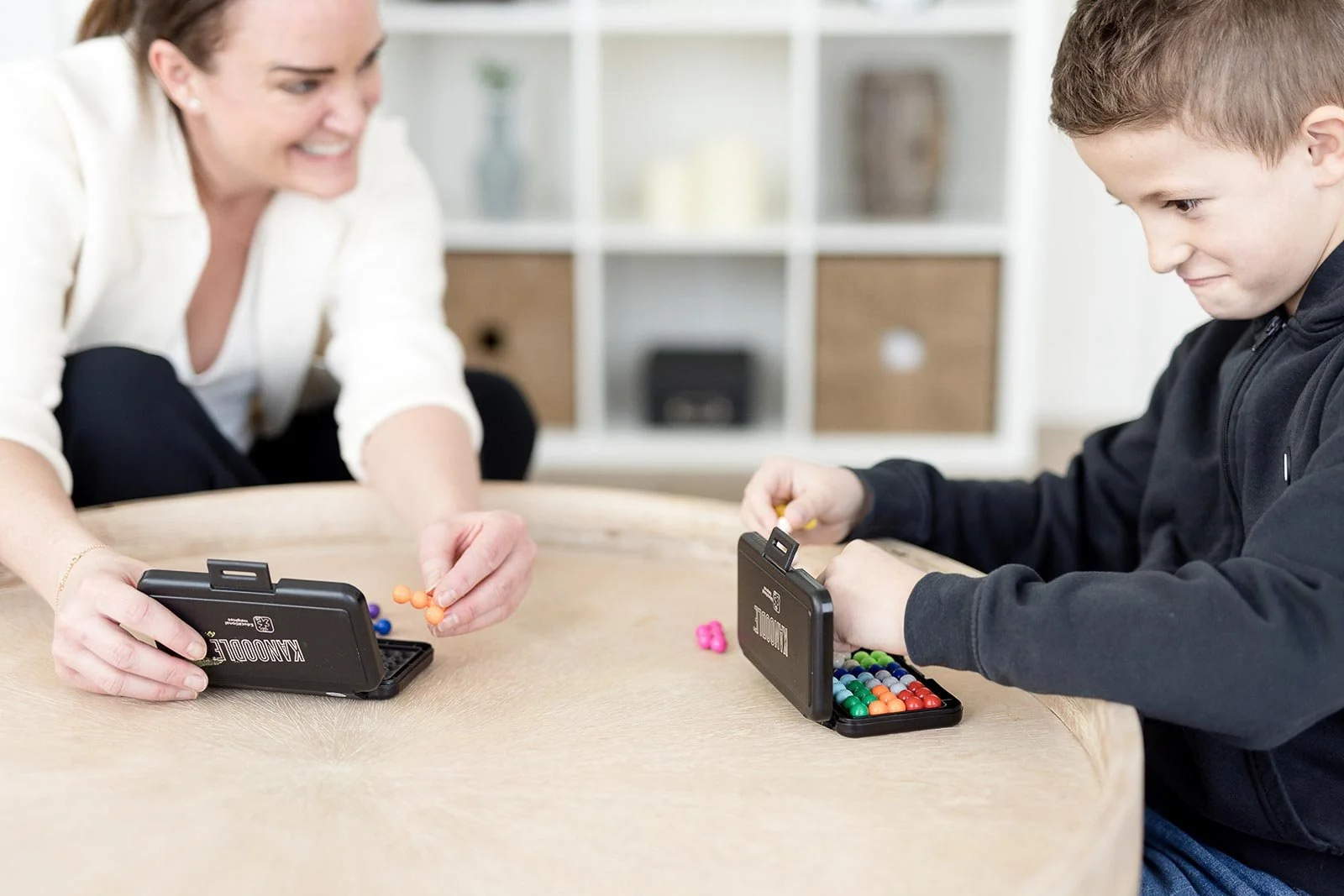
Gifted and twice-exceptional (2e) children often show something called “asynchronous development” — meaning their intellectual, emotional, and social skills don’t always grow at the same pace. A child might solve complex puzzles years beyond their age but still struggle with emotional regulation or frustration tolerance. Therapy that integrates both cognitive challenge and emotional support helps these children thrive by meeting them at every level of their development — not just the advanced ones.
Support for your family starts here.
Our Team
Meet Our Calgary Child Psychologists
Behind every session is a team of warm, specialized psychologists who work only with children, teens, and families. Find the one who feels like the right fit for yours.