
Body Image Support for Children & Teens in Calgary
How They See Themselves Isn't About the Mirror.
It usually starts small enough to miss. Getting changed with the door shut now. Deleting the photo everyone else liked. Standing sideways in front of the mirror a beat too long. Then one day a sentence lands in your kitchen — I look disgusting, I hate my body, I'm the biggest one in my class — said flatly, like a fact they've known for a while. And you realize this has been going on in the background for months.
Body image isn't really about the body. It's about how it feels to live in one — a feeling assembled from comparison, offhand comments, a culture that talks about bodies constantly, and a mind that's turned all of it inward. That's why "but you look lovely" bounces straight off. You're answering a question they aren't actually asking. At Creative Sky Psychology, our Calgary psychologists help children and teens loosen the grip of that judgement, get their relationship with their body onto more solid ground, and stop believing their worth is something you can see.
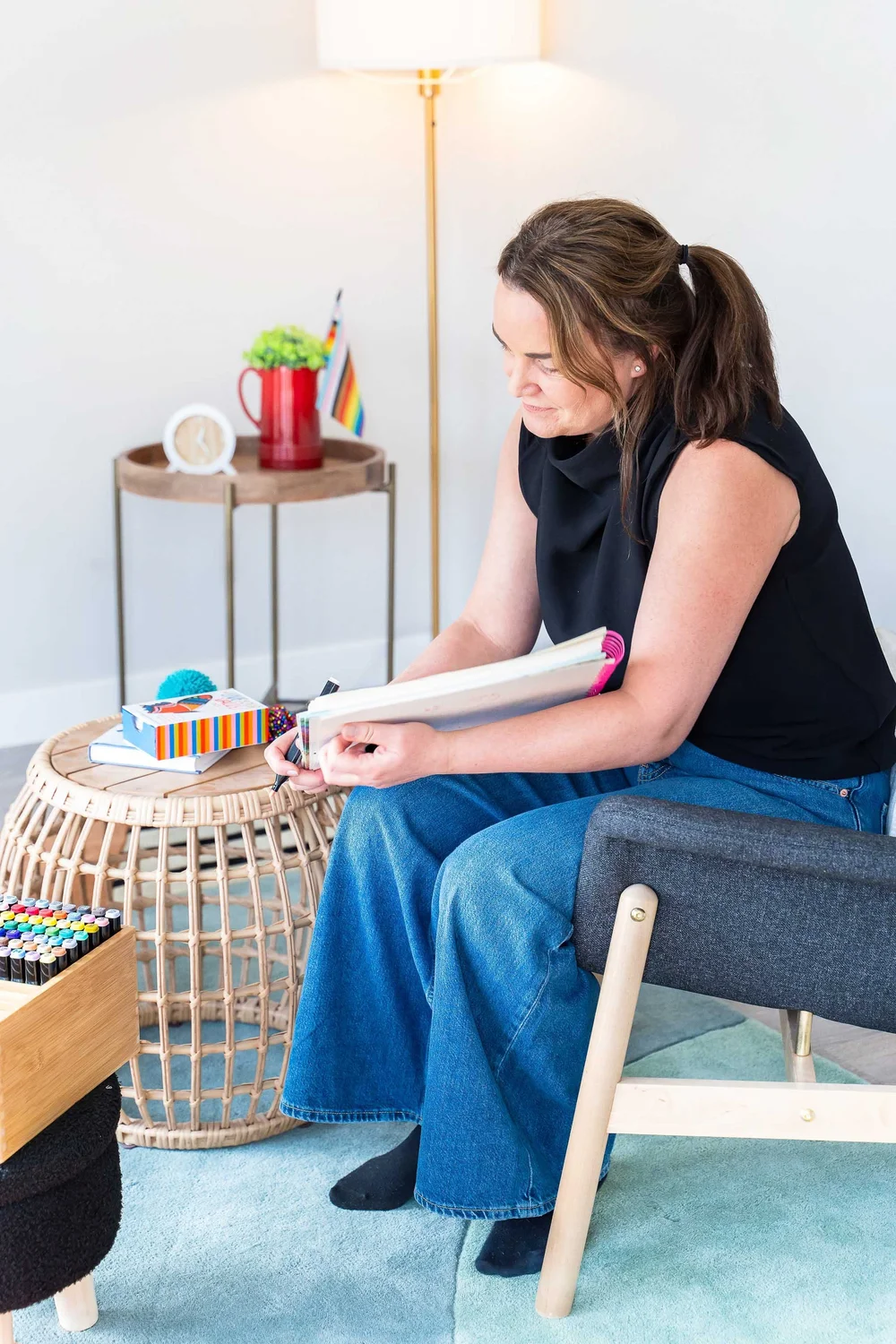
Understanding Body Image
What Is Body Image?
Body image is the picture a person carries of their own body, plus how they feel about it — and the striking thing is how loosely that picture is tied to reality. Two children can have nearly identical bodies and completely opposite experiences of living in them. One is comfortable; the other is at war. Which tells you something important: body image isn't information about a body. It's a relationship with one, and relationships are shaped by far more than facts.
It's also worth saying clearly that this isn't vanity. It's almost the opposite. Vanity is thinking well of how you look; this is a child who thinks about how they look constantly and feels terrible every time. It gets built out of comparison, a stray comment from a cousin at a barbecue, a culture that discusses bodies more or less continuously, and — for many children — puberty arriving and rearranging everything without asking. It's closely bound up with a child's broader self-esteem, and for some it starts to weigh on their mood too. At Creative Sky Psychology, our Calgary psychologists help children and teens shift that relationship: not by convincing them they look good, but by loosening how much looking good is allowed to matter.
Living Inside the Judgement
Why "you look fine" can't reach it.The mirror isn't a camera. It shows a child what they already expect to see — which is why the reflection and the reassurance never seem to be describing the same person.
- One feature gets magnified until it becomes the entire picture
- They check constantly — mirrors, windows, photos, the back of a spoon
- Compliments get filed as politeness, or pity, or you being their parent
- Comments about other people's bodies land as rules about their own
- The day gets negotiated in advance: what to wear, where to sit, whether to swim
- They're not admiring themselves. They're inspecting themselves, all day
Why "You're Beautiful" Backfires
The argument nobody meant to have.Your child says they're ugly. You say they're beautiful. It's the most natural response in the world, and it quietly concedes the whole point.
- You've argued about the verdict — and accepted that there's a verdict
- Which agrees with the premise: that how they look is the thing being scored
- Now the goal is a better score, from the one judge they'll never believe
- So they dismiss you, and reach for judges who feel more objective
- The useful move isn't a kinder verdict. It's questioning the scoreboard
- Not "do you look good?" but "since when is that the measure of you?"
The goal was never to make a child love their appearance — that's just the same scoreboard with a nicer number on it. What we're after is quieter and much more durable: a body that can mostly be forgotten about, because it's busy swimming, laughing, running for a bus, and being somewhere other than in front of a mirror. Children can absolutely get there, and most of them do it faster than their parents expect.
Common Signs of Body Image Concerns
It Usually Shows Up Long Before They Say It.
Most of this happens quietly, in small adjustments a family barely registers until they add up. And if you've also noticed changes in how your child is eating or exercising alongside these, please don't wait and watch — that's worth a conversation with a psychologist or your family doctor sooner rather than later.
The Mirror Check
Every reflection gets consulted — windows, screens, car doors. Not admiring. Inspecting, and never coming away satisfied.
Suddenly Camera-Shy
Ducking out of photos, deleting the ones everyone else liked, refusing to be in the family picture. The child who used to pose now hides.
Dressing to Disappear
Layers in July. Six outfit changes before school. Skipping the pool party they'd have loved last summer, with a reason that isn't the reason.
Measuring Against Everyone
Scrolling and comparing, then comparing in real life too. An endless feed of other people's best angles, treated as the standard.
The Running Commentary
Offhand remarks about their own body, dropped into ordinary conversation. Said lightly, meant entirely — and repeated often enough to become belief.
Stepping Back From What They Loved
Quitting dance, dropping swimming, skipping the sleepover. When a body feels like a liability, they'll give up almost anything to keep it out of view.
Age-Specific Body Image Support
Body Image Looks Different at Every Age
A child's relationship with their body forms early and shifts as they grow, so our Calgary child psychologists tailor support to their age. It's worth reaching out when your child is caught in a painful relationship with how they look — harsh self-criticism, constant comparison, avoiding being seen or activities they love, or an appearance preoccupation that's weighing on their mood and confidence. These struggles affect children of every gender, and they're fuelled by a culture obsessed with appearance. If your child's eating has also changed, please reach out promptly, to us and to your family doctor.
Preschoolers
Ages 3–5
Body image concerns are uncommon this young, but the foundations are forming — little ones absorb how the adults around them talk about bodies and food. Much of the work here is gentle prevention and coaching you on the everyday language that quietly builds a healthy body relationship.
School-Age Children
Ages 6–12
Comparison begins in earnest now — "I'm ugly," "I'm fat," avoiding swimming or being photographed, and self-consciousness shaped by peers and screens. We help children untangle their worth from their looks, build self-compassion, and see through the appearance messages all around them.
Teens
Ages 13–17
For teens, social media, comparison, and appearance pressure can turn body dissatisfaction relentless, and it can shade into disordered eating. We support a steadier sense of self-worth, help them navigate the online world more kindly, and stay alert to their overall wellbeing.
What to Expect
What Body Image Support Actually Looks Like
Telling a child they're beautiful rarely helps — because the real problem isn't how they look, it's that their worth has become tangled up in it. Our work is to gently loosen that knot, so your child can feel at home in their body again. Here's how it usually unfolds at our Calgary clinic.
Understanding the Pain Underneath
The first sessions explore where the harsh view of their body comes from — comparison, social media, comments they've absorbed, or worth that's become fused with appearance. We also gently notice what they've started avoiding, and check in on eating, involving your doctor if anything needs closer attention.
Widening Their Sense of Worth
Next we help your child untangle who they are from how they look — reconnecting with strengths, values, and the parts of themselves that have nothing to do with appearance. We also build media literacy, so the endless comparisons online start to lose their grip.
Building a Kinder Body Relationship
From there, we grow self-compassion and a more respectful relationship with their body — appreciating it for what it does and lets them do, not just how it looks. We gently ease the checking, comparing, and self-criticism that keep the pain alive.
Comfortable in Their Own Skin
Over time, the self-criticism quiets, your child returns to activities and moments they'd been avoiding, and their worth feels steadier and less tied to a mirror. We coach you on supporting a healthy body culture at home, check in throughout, and are honest when your child is ready to carry on without us.
How We Help
How We Help Children Stop Keeping Score.
We don't spend sessions trying to persuade a child that they look good. It doesn't work, and more importantly it aims at the wrong thing — it just hands them a better rating on the same scoreboard, and a rating can always be revised downward next week. What we're actually after is a child who isn't being scored at all.
At Creative Sky Psychology, our Calgary psychologists work on the machinery underneath: the checking and the avoiding that keep the judgement loud, the comparison habit and what's feeding it, and the belief that worth is a thing other people can see. We also work with parents, because how bodies get talked about at home matters enormously here — often more than anything else on the list. And where eating or exercise has started to change alongside all this, we take that seriously and address it properly, rather than hoping it passes.
- Ease the checking and the avoiding, which quietly keep the judgement running.
- Interrupt the comparison habit — including a look at what they're feeding it.
- Rebuild the relationship around what a body does, not how it rates.
- Work on the self-worth underneath, since appearance is usually the symptom.
- Change how bodies get talked about at home — gently, and including our own.
- Take changes in eating or exercise seriously, and address them properly.
Body Image Support in Calgary & Across Alberta
Helping Children and Teens Feel at Home in Their Own Skin
Creative Sky Psychology provides body image support for children and teens from our Calgary clinic, along with secure virtual appointments for families across Alberta. Whether your child has started getting changed behind a closed door, deletes every photo they're in, checks every reflection they pass, has quietly dropped the sport they used to love, or says things about their own body that stop you cold, our psychologists help young people loosen the judgement and build a steadier relationship with the body they live in — not by convincing them they look good, but by making how they look a much smaller part of who they are.
Neighbourhoods We Serve
- Aspen Woods
- West Springs
- Cougar Ridge
- Springbank Hill
- Wildwood
- Glenbrook
- Glendale
- Westgate
- Mount Royal
- Royal Oak
Virtual Body Image Support Across Alberta
Families throughout Alberta can access body image support through secure online appointments. This is a subject most young people would rather not discuss face to face with a stranger, and video can make that first conversation noticeably easier — there's less to manage, and they're somewhere they already feel unobserved. It also means a teen who'd flatly refuse to walk into a clinic can still get support, wherever your family lives in the province.
Explore All Areas We ServeUnderstanding Your Child
When Body Image Deserves a Closer Look
Body image concerns rarely travel alone. Underneath, there's often anxiety, low mood, social fear, or a mind that latches onto one feature and won't let go — and knowing which one you're dealing with genuinely changes the approach. An assessment can map what's driving your child's distress and what will actually help. One thing we'd say plainly, though: if your child's eating or exercise has changed alongside this, please don't wait for an assessment to sort it out. Start with your family doctor or reach out to us directly, because that combination is worth attention now rather than in a few months. Acting early here isn't overreacting — it's simply the version of this that's much easier to help.
Resources
Explore Our Blog
Helpful articles about body image in children and teens, why "you look fine" never lands, how bodies get talked about at home, comparison and screens, what to say when your child criticizes their own body, and practical ways parents can help without making it bigger.
Read Our Articles
Our Team
Meet the Psychologists Behind Creative Sky
Our Calgary psychologists bring diverse backgrounds, advanced training, and a shared commitment to thoughtful, evidence-informed care for children, teens, and families.
This is a subject most young people would rather not talk about at all, so the person matters. We'll help you find the psychologist your child feels safe enough to be honest with — one whose expertise, personality, and approach feel like the right fit for them and for your family.

Body Image FAQs.
Isn't Some of This Just Normal for a Teenager?
Yes, honestly. Becoming self-conscious about your appearance in adolescence is close to universal — a body changes fast, without consultation, at exactly the age when fitting in feels like survival. A teenager who spends longer on their hair and doesn't love their school photo is not a teenager in trouble.
What tips it from ordinary into worth-addressing is cost. Is the judgement occasional, or is it running in the background all day? Is it just an opinion about their appearance, or has it become a verdict on their worth? And most tellingly — is it taking things away from them? A child who's dropped swimming, skips the party, and eats lunch differently to avoid being seen isn't going through a phase. They're arranging their life around a fear, and that's the point at which it's worth someone helping.
What Do I Say When They Say They Hate Their Body?
Almost anything except "no you don't, you're gorgeous." That's the instinct — it's loving, and it's a dead end, because you've just started an argument about the verdict and quietly agreed there's a verdict to argue about. They'll dismiss you as biased, and you're back where you started, except now they know not to say it out loud again.
Try being curious instead of corrective. "That sounds like a horrible way to feel — how long has it been like that?" You're not agreeing with the content; you're staying in the room with them, which is the thing that actually helps. Then aim slightly to the side of appearance altogether: notice what they think, what they say, what they do, who they are. Not as a technique to be deployed the moment they're upset — just as the ordinary weather of your house. Over time, the message is that in this family, looks are not the interesting part of a person.
Should I Just Avoid Talking About Bodies Altogether?
Not silence — but do watch the commentary. It's worth knowing that children take in remarks about anyone's body, not just their own. "She's got so thin" and "I look enormous in this" both teach the same lesson: bodies are being evaluated around here, constantly, and yours is on the list. Compliments about appearance count too, even the warm ones — they still say that this is what we notice about people.
What helps most isn't a rule about what you can't say. It's expanding what gets talked about at all. Bodies as things that do stuff, carry you up a hill, are strong or tired or hungry. Other people described by what they're like rather than what they look like. The aim is simply to make appearance a smaller category in your household than it currently is in the culture — which is a low bar and still makes a real difference.
Does This Happen to Boys Too?
Yes — and it gets missed far more often, because everyone is looking for it in girls. Boys' body image concerns tend to point in a different direction, frequently toward wanting to be bigger and more muscular rather than smaller, which our culture reads as ambition and discipline instead of distress. A boy who's unhappy with his body often gets encouragement.
The other reason it hides is that boys are much less likely to say any of this out loud. Admitting you care how you look isn't a comfortable thing to volunteer at fourteen. So it shows up as irritability, withdrawal, or an intensity around training and eating that looks like commitment from the outside. If something about it feels off to you, trust that — the fact that it doesn't look like the version we're all trained to spot doesn't mean it isn't the same thing.
Should I Take Their Phone Away?
Confiscation rarely goes how parents hope. It tends to land as punishment for having a problem, it removes their social life along with the harm, and it doesn't touch the comparison habit — which will simply relocate to the hallway at school. You'd also be taking away the thing they use to feel better about the thing you took away.
What tends to work better is curiosity plus a small amount of agency. Look at what's actually in the feed with them, without a lecture. Ask a genuinely useful question: how do you feel after twenty minutes of that? Most teenagers have never once checked, and noticing is often more persuasive than any rule you could impose. Then help them prune — unfollowing five accounts they chose to unfollow is worth more than an hour limit they resent. Blunt restriction is sometimes necessary, but it's a poor first move.
Am I Making This Worse Without Realizing?
Possibly a little, and almost certainly not in the way you're worried about. The thing that quietly does the most is how you talk about your own body in front of them. A parent who criticizes themselves in the mirror, narrates what they're not eating, or announces they've been bad this week is teaching a full curriculum without saying a word about their child. Kids learn what bodies are for by watching the adults nearest to them.
Please don't turn that into guilt — most of us absorbed this stuff before we were old enough to consent to it, and you're likely repeating something you were taught, not inventing it. But it does hand you real leverage. Changing how you speak about yourself is free, immediate, and one of the most effective things available to you. It's also, for a lot of parents, the hardest thing on this page.
Their Eating Has Changed. What Should I Do?
Please treat this as the thing on this page that shouldn't wait. Book with your family doctor, and reach out to a psychologist — you don't need to know what's going on, or to have a name for it, or to be sure it's serious. This is the one area where getting it looked at early makes a genuine, well-documented difference to how straightforward it is to help, and where a few months of watching can cost a great deal.
In the meantime: try not to turn mealtimes into a negotiation, don't debate the beliefs, and don't police. All of those tend to entrench things and push it underground, which is the opposite of what you need. Stay warm, stay close, keep talking about everything other than food, and get a professional alongside you quickly. And if you're frightened right now — that's a completely reasonable response, and it's not something you have to work out on your own. We can help you find the right support, whether or not that ends up being us.
Will They Grow Out of It?
Some of it, yes. A good deal of adolescent self-consciousness does soften as a body settles, a life gets fuller, and there are more interesting things to think about than a mirror. If your child's concerns are mild and not costing them much, time and a decent home environment do a lot of the work.
What tends not to fade on its own is the underlying belief — that worth is visible, and theirs is being assessed. Left alone, that doesn't usually disappear; it just gets quieter and more sophisticated, and turns up decades later in an adult who still can't be photographed. The good news is that this responds well to being addressed, and children are far more flexible about it than adults are. It's much easier to loosen at thirteen than at thirty-five.
Take the First Step
Your Child Is More Than Just A Body.
They know that about everyone else. They just can't apply it to themselves yet — and telling them they look lovely won't get them there, because that's still a verdict, and they've stopped trusting verdicts. Our Calgary psychologists help children and teens loosen the judgement that's been running in the background, quiet the comparing, and rebuild a relationship with their body based on what it does rather than how it scores. The goal isn't a child who loves their reflection. It's a child who mostly forgets to check it, because they're busy being somewhere else. That's not out of reach, and it usually comes back faster than you'd expect.