
Child Confidence & Self-Esteem Support in Calgary
Confidence Isn't Something You Can Tell a Child.
You've said it a hundred different ways. You're so smart. You're amazing. You can do anything. And it slides straight off — because your child says "I'm stupid" after one wrong answer, gives up before they start, watches other kids do things they're sure they can't, and apologizes for existing. It's a strange kind of helpless: you can see exactly who your child is, and you cannot seem to hand that view to them.
Here's why the reassurance bounces. Self-esteem isn't built from what a child is told — it's built from evidence they've collected themselves. A child who believes they're capable believes it because they tried something hard, survived it not going perfectly, and noticed they were still standing. Praise can't manufacture that. Experience can. At Creative Sky Psychology, our Calgary child psychologists help children gather that evidence for themselves — so confidence stops being something you're arguing for, and starts being something they actually own.
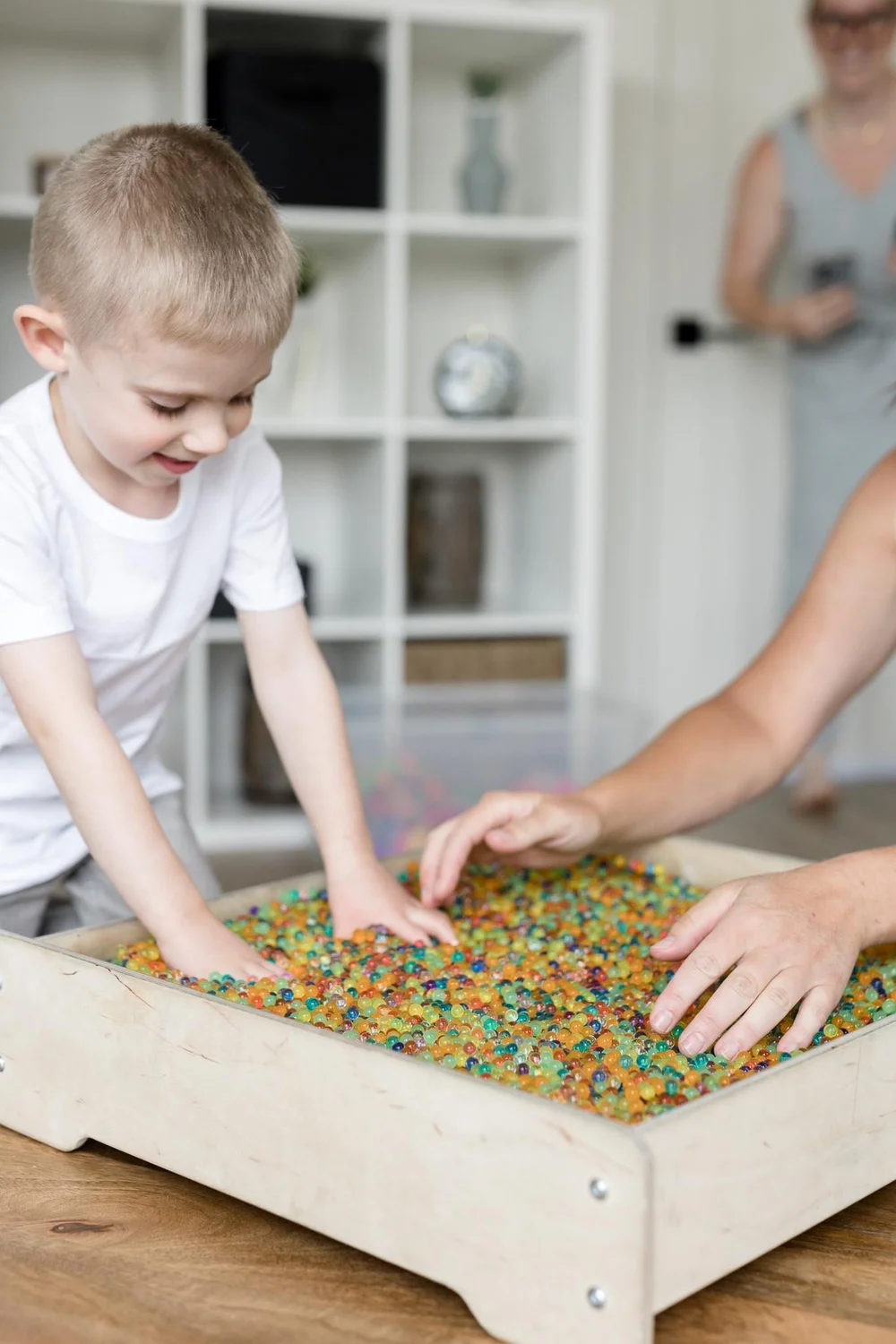
Understanding Confidence & Self-Esteem
What Is Self-Esteem, Really?
The two words get used interchangeably, but they're different things, and the difference matters. Confidence is about doing: I think I can handle this particular thing. Self-esteem is about being: I'm okay as a person, whether or not this goes well. A child can have plenty of one and almost none of the other — the star athlete who falls apart when they lose, the straight-A student who is certain they're only worth their marks. Achievement builds confidence. It doesn't automatically build self-esteem, which is why the most accomplished kid in the room is sometimes the most fragile.
Low self-esteem isn't fishing for compliments and it isn't a personality trait your child was born with. It often shows up alongside low mood or perfectionism, though it can stand on its own. It's a conclusion — one they've drawn from evidence, however unfair or incomplete that evidence was. Which is genuinely good news, because conclusions can be revisited. At Creative Sky Psychology, our Calgary child psychologists help children collect new evidence about themselves and learn to read the old evidence more accurately, so their sense of worth stops riding on whether today went well.
The Voice in Their Head
What low self-esteem actually sounds like.It isn't a mood. It's a running commentary — one your child has heard so often they've stopped noticing it's a voice at all, and started hearing it as simple fact.
- One wrong answer doesn't stay one wrong answer — it becomes "I'm stupid"
- Success gets explained away as luck, or an easy task, or someone being nice
- Failure gets filed as proof, and the file is never reopened
- They insult themselves first, so nobody else gets there before them
- They scan every room for who's better, and always find someone
- Not trying feels safer than trying, because trying can confirm the verdict
Why Praise Bounces Off
The harder you insist, the harder they argue.Every parent's instinct is to out-argue the voice with compliments. It rarely works, and there's a reason — one that explains those infuriating exchanges where the nicer you are, the more upset they get.
- Praise that clashes with their self-view doesn't feel kind — it feels false
- So they argue you down, defending what they're sure they know
- "You're brilliant" is the easiest thing to disprove — one bad mark ends it
- Praise about being can't be earned. Praise about doing can
- What lands is small, specific, and true: "you kept going when it got hard"
- Believable beats flattering. Every time
This is why confidence can't be handed over, and why it's so painful to watch. But it's also the way through: every time a child tries something hard, has it go imperfectly, and discovers they're still okay, the old conclusion gets a little weaker. That's not a speech you can give them. It's an experience they can have — and they can have it more than once.
Common Signs of Low Self-Esteem
Low Self-Esteem Rarely Announces Itself.
It doesn't usually arrive as a child telling you they don't like themselves. It arrives as giving up, refusing, apologizing, or an offhand comment at bedtime that stays with you for a week.
"I'm Stupid. I'm the Worst."
Said flatly, about a spelling mistake. They're not being dramatic — they're reporting what they believe, in the only words they have.
Quitting Before They Start
"I don't want to" almost always means "I can't face finding out." Not trying keeps the belief safely untested.
Compliments Slide Right Off
You say something kind and true; they roll their eyes or argue. It isn't rudeness — it's a mismatch with everything they're sure they know.
Always Measuring Themselves
Who's faster, smarter, further ahead. They scan every room for a ranking, and somehow always land themselves at the bottom of it.
Sorry for Everything
Apologizing for asking, for needing, for taking up space. Somewhere they decided the safest thing to be is less of a bother.
Small Corrections Land Huge
A gentle note about their handwriting ends the evening. When you already believe you're failing, feedback isn't information — it's confirmation.
Age-Specific Confidence & Self-Esteem Therapy
Self-Esteem Looks Different at Every Age
How a child sees and values themselves changes as they grow, so our Calgary child psychologists tailor confidence work to your child's age. It's worth reaching out when your child is hard on themselves — a harsh inner voice, "I'm stupid" or "I'm not good enough," giving up easily, fear of trying or failing, constant comparison, or a need for lots of reassurance. Here's the key: real confidence isn't built by telling a child they're great. It grows from feeling capable, accepted, and understood — and therapy helps rebuild it steadily, from the inside out.
Preschoolers
Ages 3–5
A young child's sense of self grows from feeling securely loved and from mastering small things through play. Early wobbles can look like "I can't," giving up quickly, or fear of trying. We build confidence through connection and playful mastery, and coach you on encouragement that truly lands.
School-Age Children
Ages 6–12
Now children start comparing themselves to peers, and low self-esteem can sound like "I'm dumb" or "nobody likes me," alongside avoiding challenges and seeking approval. We help them notice and soften the inner critic, build genuine competence, and grow real self-compassion.
Teens
Ages 13–17
Teen self-worth gets tangled with identity, appearance, social media, and achievement, and the self-criticism can turn brutal. We help them build a sense of value that doesn't hinge on looks, likes, or grades — steadier, kinder, and rooted in who they actually are.
What to Expect
What Confidence Therapy Actually Looks Like
You can't praise a child into believing in themselves — if you could, this would be easy. Real, lasting confidence is built, not handed over, so our work helps your child quiet their inner critic and earn a steadier sense of their own worth. Here's how it usually unfolds at our Calgary clinic.
Understanding the Inner Critic
The first sessions are about getting to know the harsh voice in your child's head — what it says, where it came from, and what's often underneath it, like anxiety, a learning struggle, or a painful comparison. Naming the critic is the first step to loosening its grip.
Challenging the Negative Story
Next we help your child question the story that they're not good enough and build a fairer, kinder view of themselves. This isn't forced positivity — it's learning to talk to themselves the way they'd talk to a friend, which is a skill that steadies self-worth for good.
Building Real, Earned Confidence
Confidence grows most from doing hard things and surviving them, so we help your child take brave steps, build genuine competence, and reconnect with their real strengths. Each small success gives them evidence they can trust, which sticks far better than any pep talk.
A Kinder Relationship With Themselves
Over time, the inner voice softens, your child tries more and shrinks back less, and their sense of worth stops depending on being perfect or approved of. We coach you on nurturing this at home, check in throughout, and are honest when your child is ready to carry on without us.
How We Help
How We Help Children Build Real Confidence.
Building self-esteem isn't pep talks, sticker charts, or affirmations in a mirror. A child who is certain they're rubbish doesn't become certain they're wonderful because someone insisted. What actually shifts the belief is evidence — and evidence has to be earned, in real situations, by them. So that's what we build: small, achievable, genuinely hard things, done on purpose, until the story your child tells about themselves starts running out of support.
At Creative Sky Psychology, our Calgary child psychologists help children catch the voice in their head and start questioning it rather than obeying it. We work on the thing underneath — that their worth has quietly become conditional on performing well — and separate the two, so a bad mark stops being a verdict on who they are. And we'll show you what to say, because the difference between praise that bounces and praise that lands is small, specific, and completely learnable.
- Help your child hear the critical voice as a thought, not a fact about them.
- Build evidence through small brave steps they choose and complete themselves.
- Practise surviving imperfection, rather than avoiding anything that might expose it.
- Untangle worth from performance, so one bad day isn't a referendum on who they are.
- Find the strengths they've been quietly discounting, and make them count again.
- Coach parents on praise that's believable enough to actually get through.

Confidence & Self-Esteem Support in Calgary & Across Alberta
Helping Children Build Belief in Themselves That Actually Holds
Creative Sky Psychology provides confidence and self-esteem support for children and teens from our Calgary clinic, along with secure virtual appointments for families across Alberta. Whether your child calls themselves stupid over a spelling mistake, won't try anything they might not be good at, argues with every compliment you offer, measures themselves against everyone in the room, or apologizes for simply taking up space, our child psychologists help children gather real evidence about who they are — because self-esteem isn't something a child can be talked into, no matter how true the words are.
Neighbourhoods We Serve
- Aspen Woods
- West Springs
- Cougar Ridge
- Springbank Hill
- Wildwood
- Glenbrook
- Glendale
- Westgate
- Mount Royal
- Royal Oak
Virtual Confidence Support Across Alberta
Families throughout Alberta can access confidence and self-esteem support through secure online appointments. It suits this work well, because most of what builds self-esteem doesn't happen in a session — it happens in the week, in the small brave things a child tries at home and at school. Sessions plan those steps and make sense of how they went, and much of the value comes from coaching parents on what to say when a child gets it wrong. That travels anywhere in the province.
Explore All Areas We ServeUnderstanding Your Child
Where Did the Belief Come From?
Children rarely decide they're stupid for no reason. Very often the belief is downstream of something real and unnoticed — a learning difference that makes reading genuinely harder, ADHD that draws correction all day long, anxiety that hijacks a test, or social difficulties nobody explained. Years of struggling at something everyone else seems to find easy is remarkably persuasive evidence to a child, and the conclusion they draw is almost always about their worth rather than their wiring. This is why an assessment can be one of the most powerful things you do for a child's self-esteem: it replaces "I'm broken" with an actual explanation — and a reason is something a child can live with. Being stupid isn't.
Resources
Explore Our Blog
Helpful articles about children's confidence and self-esteem, why praise so often backfires, the child who won't try, perfectionism and the fear of failing, what to say when they call themselves stupid, and practical ways parents can help a child build belief that actually holds.
Read Our Articles
Our Team
Meet the Psychologists Behind Creative Sky
Our Calgary child psychologists bring diverse backgrounds, advanced training, and a shared commitment to thoughtful, evidence-informed care for children and families.
A child who doesn't think much of themselves is unlikely to believe a stranger who says otherwise — so who they sit with matters. We'll help you find the psychologist your child warms to, whose expertise, personality, and approach feel like the right fit for them and for your family.

Confidence & Self-Esteem FAQs.
Can Self-Esteem Actually Change, or Is It Just Personality?
It changes — and this is the most important thing on the page. Self-esteem isn't a fixed trait your child arrived with. It's a belief, built from evidence, and beliefs are updatable. Temperament plays a part in how easily a child concludes bad things about themselves, but the conclusion itself was learned, and anything learned can be relearned.
What it isn't is fast. A belief built over four years of small daily proof doesn't fall over because of one good conversation — it needs its own pile of contradicting evidence, gathered slowly. That's frustrating for parents who want to fix it tonight. But children are also remarkably open to revising their story about themselves when the evidence genuinely shifts, and that openness is on your side.
Is This My Fault?
Almost certainly not, and we'd say that plainly to your face. Self-esteem is built from an enormous number of inputs, most of which have nothing to do with you: temperament, a classroom, a comment from a coach, an undiagnosed learning difference, one friendship that went wrong in Grade 3, and a thousand ordinary moments you never saw. Parents get far too much credit and far too much blame for the whole thing.
What we'd gently add is that this question is worth setting down, because guilt makes you a less effective parent, not a more effective one. It pushes you toward over-praising, over-protecting, and jumping in to fix — all of which quietly teach a child they can't handle things. The fact that you're reading this at all tells us most of what we need to know about the parenting.
What Should I Say Instead of "You're Amazing"?
Say something smaller and truer. Global praise about who they are — you're brilliant, you're the best — is unfalsifiable, which sounds like a good thing and isn't. A child can't earn it, can't verify it, and can disprove it with one bad afternoon. So it goes in the pile marked "things Mum says."
What lands is specific and about what they did: "you kept going when that got hard," "you asked for help even though you hated to," "you were the one who noticed she was upset." It's believable, so it gets in. And notice what those examples have in common — none of them are about outcomes. Praise the effort, the choice, the persistence, and you're building something a bad mark can't take away. Praise the result, and their worth goes up and down with their week.
Should I Push Them to Try Things They're Scared Of?
Yes — but the size of the push is everything. Confidence is only ever built by doing hard things, so protecting a child from everything difficult keeps them comfortable and quietly confirms that they couldn't have handled it. Avoidance always feels like kindness in the moment and always costs something later.
The trick is calibration. Too big a push produces failure, which just adds to the evidence pile you're trying to shrink. What works is the next step, not the finish line: not the school play, but auditioning; not the sleepover, but an hour of it. Small enough that they'll probably manage it, big enough that managing it means something. And let them choose the step — a child who picked it owns the result. One they were marched into belongs to you.
My Child Only Feels Good When They Win. Isn't That Confidence?
It looks like it, and it's actually the opposite — this is one of the most misread situations in parenting. A child whose good feeling depends entirely on winning doesn't have self-esteem. They have a scoreboard. And a scoreboard requires constant defending, which is exhausting and gets harder every year as the competition gets better.
The tell is what happens when they lose. Solid self-esteem takes a hit and recovers. Scoreboard self-esteem collapses — a bad game means they're worthless, not that they had a bad game. These kids often look like the most confident in the room right up until the moment they aren't, and they're frequently praised into it by adults who mean well. The work isn't to make them care less about winning. It's to build a floor underneath them that a loss can't reach.
Is Social Media Causing This?
It's a fair suspicion, though the honest answer is messier than the headlines. Researchers genuinely disagree about how much social media harms self-esteem overall — for many kids the effect is small, and for some it's a lifeline to people who understand them. Blaming the phone can also be a way of not looking at the rest of it.
That said, one part is fairly well established: comparison is corrosive, and social media industrializes it. Children have always measured themselves against the room; now the room is infinite, curated, and open at midnight. It's less that social media creates low self-esteem and more that it pours fuel on a habit these kids already have. Which is why the useful conversation is rarely about screen time limits, and usually about how they feel after twenty minutes of scrolling — and whether they've noticed.
Won't Building Self-Esteem Make Them Arrogant?
No — and the reason is a nice piece of psychology. Arrogance isn't excess self-esteem. It's usually a defence against the lack of it. People who genuinely feel okay about themselves don't need you to know they're impressive; they've got nothing to prove and nothing to protect. The loudest kid in the room is rarely the most secure one.
So the two things aren't on the same dial. You cannot give a child too much of the belief that they're worthwhile as a person — that's the floor everything else stands on. What you can overdo is telling them they're better than everyone else, or shielding them from every consequence, which builds entitlement rather than esteem. Solid self-esteem actually makes a child easier to be around: they can apologize, lose, and hear feedback, because none of it threatens who they are.
When Should We Get Help Rather Than Wait It Out?
Some wobbling is normal, especially around adolescence, and it isn't all cause for action. What's worth taking seriously is when the belief starts making decisions: when your child is turning down things they want, shrinking their world to stay safe, or when the self-criticism has stopped being occasional and become the background noise of their life. Also worth attention is any hint the difficulty has a cause nobody's found — years of quietly struggling at school is often where "I'm stupid" was first learned.
Please reach out sooner if the tone has shifted from harsh to hopeless — a child talking about being worthless, a burden, or better off gone is telling you something bigger than low self-esteem, and that deserves a proper conversation with a psychologist or your family doctor rather than a wait-and-see. That's a hard sentence to read about your own child. But low self-esteem responds genuinely well to being taken seriously, and the earlier the story gets interrupted, the less of it there is to unwrite.
Take the First Step
One Day They'll See What You See.
You've been saying it for years, and every word of it is true — it just can't get in yet. That's not because your child isn't listening, and it isn't because you've said it wrong. It's because belief about yourself gets built from evidence, and right now theirs is all pointing the other way. Our Calgary child psychologists help children gather new evidence, question the voice that's been telling them otherwise, and find out that they're still okay even when something goes badly. It's slow, and then it isn't. Eventually they stop needing you to insist — because they've seen it for themselves.