
Social Skills & Peer Relationship Therapy in Calgary
Helping Children Build
Confidence &
Lasting Friendships.
Making friends is not always easy. Some children struggle to start conversations, join group activities, understand social cues, manage conflict, or feel confident around peers. Others deeply want friendships but feel left out, misunderstood, or unsure how to connect. Social challenges can affect confidence, school experiences, emotional wellbeing, and a child's sense of belonging.
At Creative Sky Psychology, our Calgary psychologists help children and teens strengthen the social, emotional, and communication skills needed to build meaningful relationships. Through evidence-based, developmentally appropriate therapy, we help children better understand social situations, develop confidence, improve emotional regulation, and navigate friendships with greater success both inside and outside the classroom.
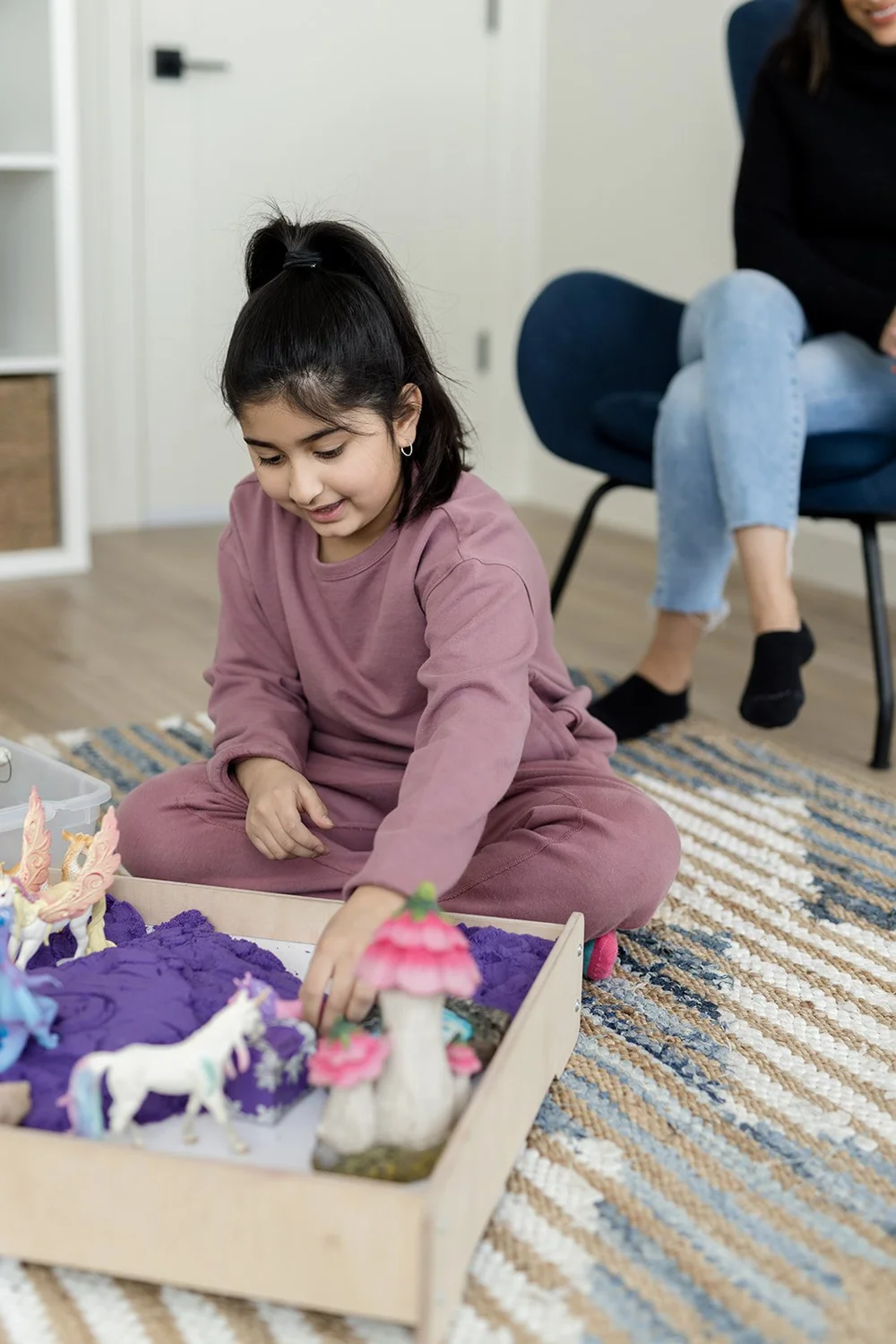
Understanding Social Skills
What Are Social Skills & Peer Relationships?
Social skills are the abilities children use to connect, communicate, understand others, manage conflict, and build friendships. These skills are not just about being outgoing or polite. They involve reading social information, adjusting to different people, understanding perspective, and knowing how to repair when things go wrong.
Friendship challenges can be especially painful because many children want connection but do not always know how to create or maintain it. With support, children can better understand social situations, build confidence, and develop relationships that feel more comfortable, reciprocal, and authentic.
Social Understanding
Why friendship can feel confusing.Social situations move quickly and often rely on unspoken information. Some children need support noticing, interpreting, and responding to the subtle cues that help interactions feel smooth.
- Understanding tone, facial expression, and body language
- Noticing when someone is interested, uncomfortable, or confused
- Recognizing the difference between teasing, joking, and hurtful comments
- Understanding personal space, timing, and turn-taking
- Seeing another child's perspective during conflict
- Knowing how to enter, pause, or leave a conversation
Friendship Patterns
Why social struggles can keep repeating.When children have repeated social stress, they may begin using patterns that protect them from rejection but make connection harder. Therapy helps children understand these patterns without shame.
- Withdrawing because friendship feels unpredictable
- Trying too hard to be liked or accepted
- Becoming silly, intense, or controlling when nervous
- Assuming peers are rejecting them before checking
- Reacting strongly when they feel left out or misunderstood
- Avoiding repair because they do not know what to say next
The goal is to help children understand themselves and others more clearly, build confidence in social situations, and develop friendships that feel authentic. With thoughtful support, children can learn practical skills for connection while still being respected for their personality, strengths, interests, and unique way of seeing the world.
Common Signs of Social Struggles
Friendship Challenges Can Look Different in Every Child.
Social skills challenges do not always look like shyness. Some children withdraw, some become silly or intense, and others try hard to connect but miss the subtle cues that help friendships feel comfortable and reciprocal.
Conversation Difficulties
Struggling to start conversations, join group play, take turns talking, ask questions, or know what to say next with peers.
Missed Social Cues
Having difficulty reading facial expressions, tone of voice, body language, personal space, humour, or unspoken social rules.
Friendship Conflict
Frequent misunderstandings, feeling excluded, difficulty repairing conflict, or becoming upset after peer disagreements.
Social Anxiety
Avoiding recess, birthday parties, group activities, presentations, or new social situations because of worry or fear of embarrassment.
Big Reactions
Strong emotional responses to teasing, losing games, being left out, changes in plans, or friendship disappointments.
Low Social Confidence
Worrying about being liked, saying the wrong thing, not fitting in, or feeling unsure how to make and keep friends.
Age-Specific Social Skills Therapy
Friendship Struggles Look Different at Every Age
What friendship asks of a child changes enormously from preschool to the teen years, so our Calgary child psychologists tailor social skills support to your child's stage. It's worth reaching out when your child is often left out or in conflict, when they're coming home lonely or upset, when they're avoiding social situations, or when you can sense they want connection but can't quite find their way to it. This work is never about changing who your child is — it's about giving them the tools to build the friendships they're longing for.
Preschoolers
Ages 3–5
Early friendship is all about sharing, taking turns, joining in play, and handling the frustration when things don't go their way. We build these foundations through guided play and coach parents on the small everyday moments where cooperation and empathy quietly grow.
School-Age Children
Ages 6–12
Now the social world gets complex — making and keeping friends, reading cues, group dynamics, and the sting of being left out. We help children practise these skills through role-play and games, and work out whether something underneath, like anxiety, is getting in the way.
Teens
Ages 13–17
Teen friendships run deeper and higher-stakes, tangled with belonging, social anxiety, conflict, and the pressures of group and online life. We help them navigate all of it, build genuine connection, and feel more secure in who they are among their peers.
What to Expect
What Social Skills Therapy Actually Looks Like
Social skills therapy isn't a lecture on manners or a push to make your child more outgoing. It's warm, hands-on, and often genuinely fun — real practice for the moments that trip them up, at a pace that fits who they are. Here's how it usually unfolds at our Calgary clinic.
Understanding Their Social World
The first sessions are about figuring out where the difficulty really is — reading social cues, starting conversations, handling conflict, or managing the anxiety that makes it all harder. We also look for anything underneath, like social anxiety or a neurodevelopmental difference, so the support fits the real picture.
Building Skills in a Safe Space
In session, your child practises specific skills through games, role-play, and stories — reading emotions, joining a group, taking turns, repairing after a fight. Getting to try these where there's no risk of embarrassment is what makes them feel doable out in the real world.
Practising in the Real World
Skills only count where friendships actually happen, so we help your child carry them into the playground, the classroom, and the group chat. We coach you — and, where it helps, their school — so there's gentle support around them as they try new things.
Confidence and Connection
Over time, your child reads situations more easily, handles bumps without falling apart, and starts building the friendships they've wanted. Confidence and belonging grow together. We check in with you throughout and are honest when your child is ready to carry on without us.
How We Help
How Social Skills Therapy Helps Children Build Friendships.
Social skills therapy helps children understand the many small pieces that make friendships work: conversation, flexibility, emotional regulation, reading social cues, managing conflict, and feeling confident enough to join in. Rather than changing a child's personality, therapy helps children build practical tools for connection while honouring their strengths, interests, and unique way of relating to others.
At Creative Sky Psychology, our Calgary psychologists use developmentally appropriate, evidence-based strategies to support children and teens with friendship challenges, social anxiety, peer conflict, bullying experiences, neurodiversity, ADHD, and low social confidence. We help children practice skills in a supportive way so they can feel more capable in real-world social situations.
- Strengthen conversation skills, listening, turn-taking, and confidence in group interactions.
- Learn to read facial expressions, body language, tone of voice, and other social cues.
- Handle teasing, exclusion, friendship conflict, and peer misunderstandings more effectively.
- Build emotional regulation for disappointment, rejection, and unexpected social challenges.
- Develop assertiveness, empathy, healthy boundaries, and perspective-taking skills.
- Support parents with practical strategies for playdates, school, and peer relationships.
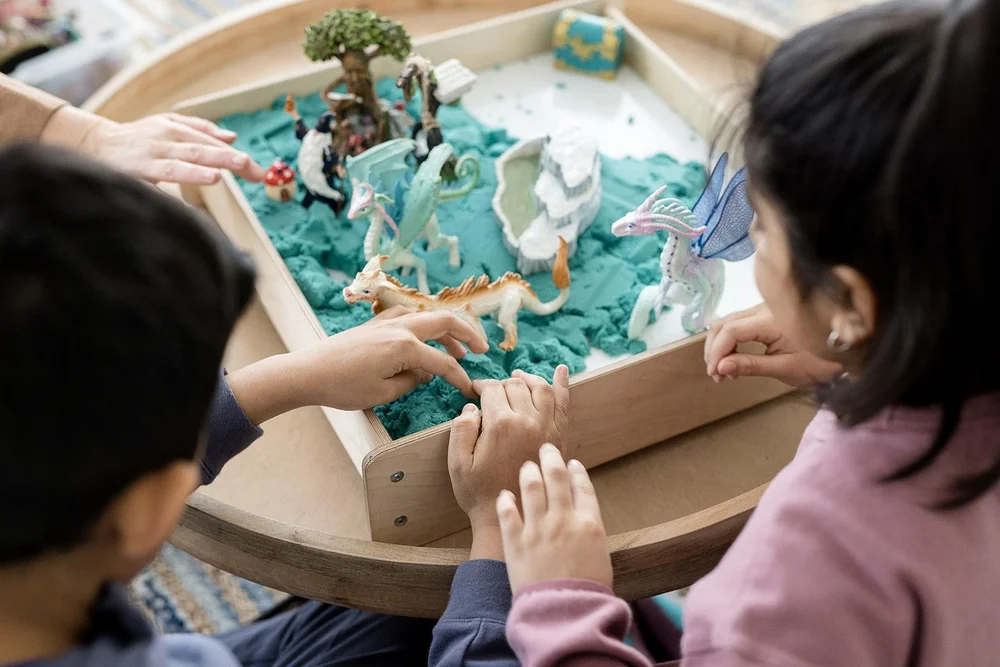
Social Skills Therapy in Calgary & Across Alberta
Support for Children and Teens Building Confidence, Friendship Skills, and Peer Relationships
Creative Sky Psychology provides specialized social skills and peer relationship therapy for children and teens from our Calgary clinic, as well as secure virtual therapy for families throughout Alberta. Whether your child is struggling with making friends, joining groups, reading social cues, managing friendship conflict, social anxiety, bullying, ADHD, autism, emotional regulation, or low confidence with peers, our psychologists help children build practical skills for connection, communication, and belonging.
Neighbourhoods We Serve
- Aspen Woods
- West Springs
- Cougar Ridge
- Springbank Hill
- Wildwood
- Glenbrook
- Glendale
- Westgate
- Mount Royal
- Royal Oak
Virtual Social Skills Therapy Across Alberta
Families throughout Alberta can access social skills and peer relationship counselling through secure online therapy. Virtual sessions can be helpful for children and teens who need support with social confidence, friendship stress, bullying, social anxiety, emotional regulation, or communication skills from the comfort of home. Our psychologists also support parents with practical strategies for coaching friendships, playdates, school concerns, and peer challenges.
Explore All Areas We ServeUnderstanding Your Child
Wondering What's Behind Your Child's Social Struggles?
Friendship challenges can sometimes be connected to anxiety, ADHD, autism, learning differences, giftedness, emotional regulation difficulties, bullying, social communication differences, or low confidence. A comprehensive psychological assessment can help clarify your child's strengths and needs, identify what may be affecting peer relationships, and provide practical recommendations for home, school, and therapy.
Our Social Skills Specialists
Psychologists Who Help Children Build Meaningful Friendships
Our Calgary child psychologists support social skills, friendship challenges, peer conflict, social anxiety, emotional regulation, autism, ADHD, communication skills, and parent coaching.
View All PsychologistsCurrent Clients Only
Ashley Megaw
Registered Psychologist
Social Skills • Social Anxiety • Confidence
VIEW PROFILE →Accepting New Clients
Kate Masters
Registered Provisional Psychologist
Social Skills • Neurodivergence • Autism
VIEW PROFILE →Accepting New Clients
Danielle Nicholson
Registered Psychologist
Social Communication • Autism • ADHD
VIEW PROFILE →Accepting New Clients
Whitney Lodge
Registered Psychologist
Peer Relationships • Emotional Regulation • Social Confidence
VIEW PROFILE →Resource Library
Helpful Articles
Explore supportive, evidence-based articles about social skills, friendship challenges, peer relationships, social anxiety, bullying, emotional regulation, confidence, and helping children build meaningful connections.
View Our BlogSocial Skills & Peer Relationship FAQs.
When Should I Consider Social Skills Therapy for My Child?
It's worth considering when friendship struggles are causing your child real distress, rather than being a passing phase. Signs include a child who wants friends but can't seem to make or keep them, who's regularly left out, often in conflict, coming home upset about peers, or starting to avoid social situations.
You don't need to wait for a crisis. Because social confidence builds on itself — good experiences lead to more, painful ones lead to withdrawal — earlier support often prevents a difficult patch from hardening into a lasting belief of "I'm not good with people." If your child seems lonelier or more stressed socially than their peers, that's reason enough.
Can Social Skills Be Taught, or Do Children Naturally Grow Into Them?
Both are true, and that's the key. Most children pick up social skills naturally, just by watching and doing — but some don't absorb them the same way, and for those kids the skills can absolutely be taught explicitly.
Think of it like reading: many children learn almost effortlessly, while others need direct, structured teaching, and that says nothing about their intelligence. Social skills work the same way. Breaking down the "hidden rules" — how to join a group, keep a conversation going, notice when someone's losing interest — and practising them in a supportive setting gives a child tools the natural route didn't provide.
Does Social Skills Therapy Help Children With ADHD or Autism?
Yes, and it's often especially helpful for these children — but the approach matters. Kids with ADHD may know the social rules yet struggle to act on them in the moment because of impulsivity or fast-moving cues; autistic children may process social information differently and benefit from clear, explicit teaching.
Good social skills work is affirming, not about forcing a child to "act normal" or mask who they are. It builds genuine understanding and practical tools while respecting how their brain works, so connection becomes easier on their own terms.
What if My Child Has Friends but Struggles to Keep Them?
This is a common and important pattern, and it points to a specific skill set. Making friends and keeping friends draw on different abilities. A child might shine at the exciting first meeting but struggle with the maintenance: managing conflict without blowing up, sharing control, repairing after a disagreement, reading when a friend needs space, or being a consistent, reciprocal presence.
Friendships often break down not at the start but over these bumps. Therapy can target exactly those maintenance skills — conflict repair, flexibility, perspective-taking — which are frequently the missing piece for a warm, well-meaning child who keeps losing friends.
How Do Psychologists Teach Social Skills During Therapy?
It's active and practical, not a lecture on manners. Depending on the child's age, our Calgary psychologists use role-play, games, real-life problem-solving, story and video examples, and lots of practice with gentle feedback in a low-pressure setting. We break big, fuzzy skills into concrete, learnable steps — how to start a conversation, join a game, handle teasing, calm down after conflict — and rehearse them until they feel more natural.
The goal is for skills to transfer to the real world, so we also coach parents and, where helpful, work with the child's actual social situations rather than only talking about them in the room.
Can Therapy Help Children Who Are Frequently Left Out or Experience Peer Conflict?
Yes — and this is often where children hurt the most. Being repeatedly excluded or caught in conflict can chip away at self-worth and even feed anxiety or low mood, so it's worth addressing rather than hoping it passes.
Therapy helps on two fronts: building the child's own skills (reading situations, responding to teasing, repairing conflict, finding the right peers) and strengthening their emotional resilience so rejection stings less and doesn't define them. Where bullying is involved, we also help parents and schools respond, because some situations need adults to step in — not just skills from the child.
How Can Parents Support Social Skill Development at Home?
Parents are one of the most powerful influences here. A few things help: arrange low-key, one-on-one playdates where friendships actually deepen (large groups are harder), and "coach from the sidelines" rather than solving conflicts for them — questions like "what could you try?" build skills. Model the social behaviour you'd like to see, and narrate your own social thinking out loud so it becomes visible.
Most of all, keep home a safe place to debrief hard social days without judgment. When a child feels securely connected at home, they have a base of confidence to take out into the peer world.
How Long Does Social Skills Therapy Usually Take?
It varies with the child and the goals, but social skills work is often encouraging because progress tends to show up in real life fairly quickly once a child has a few tools and some early successes. Many children make meaningful gains over a few months, especially when parents reinforce the skills at home.
Children with more complex needs — significant anxiety, autism, ADHD, or a history of painful peer experiences — may benefit from longer support. The aim isn't to turn a child into a social butterfly; it's to give them the confidence and skills to build the kind of genuine friendships that matter to them.
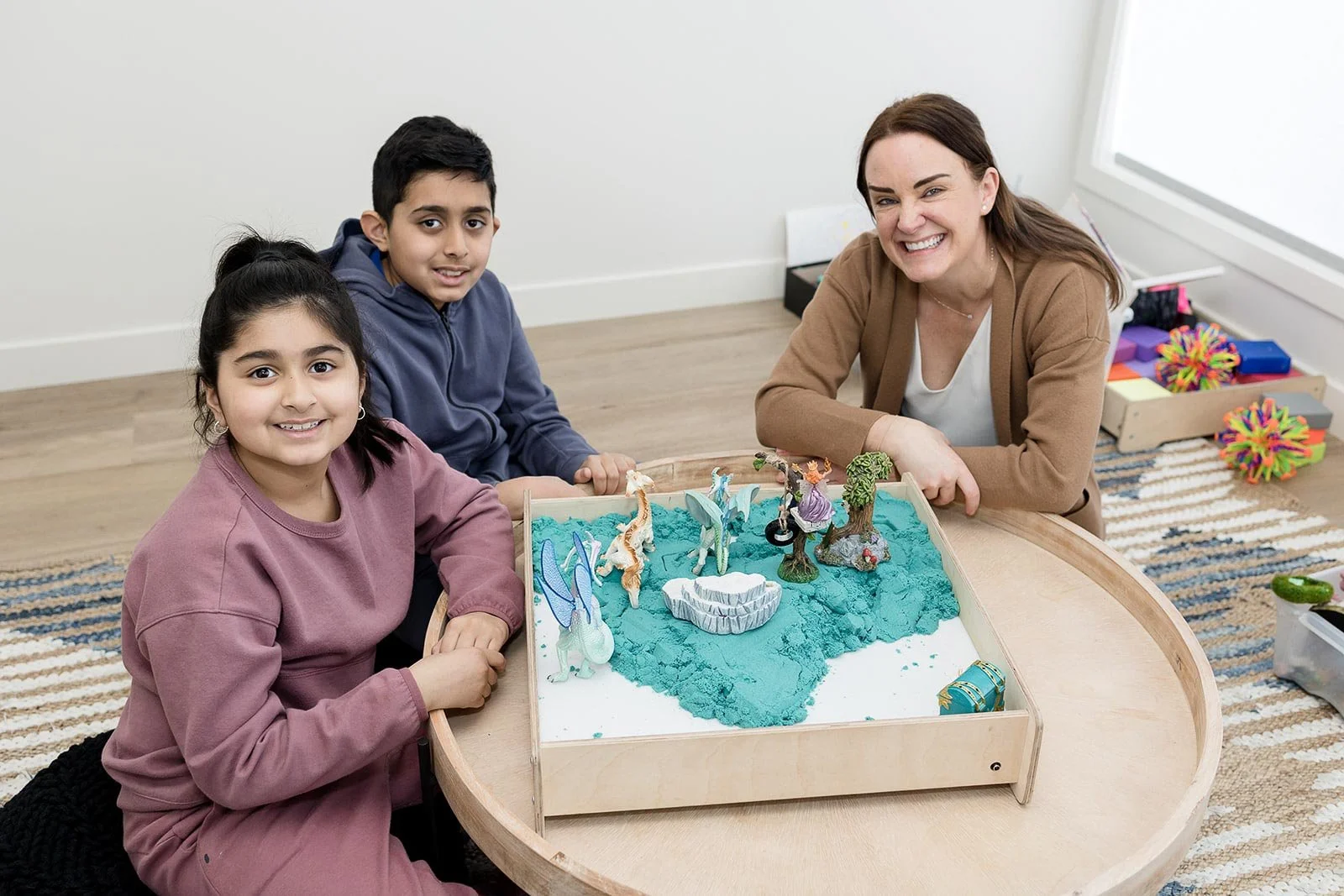
Take the First Step
Small Social Skills Can Lead to Life-Changing Connections.
Every child deserves to feel accepted, included, and confident in their relationships. Whether your child struggles to make friends, navigate peer conflict, understand social cues, manage social anxiety, or maintain healthy friendships, they do not have to figure it out alone. Our Calgary psychologists provide compassionate, evidence-based support that helps children strengthen communication, emotional regulation, perspective-taking, and social confidence so they can build meaningful relationships at school, in activities, and throughout everyday life.