
Growth, Grit & Resilience Support for Children in Calgary
Resilience Isn't a Trait. It's a Relationship.
Your child falls apart when something goes wrong. They quit when it gets hard, spiral over a disappointment that other kids shrug off, and can't seem to get back up without you. And everyone has advice: don't rescue them, let them struggle, they need more grit. So you step back — and watch them sink, and wonder whether you've just made it worse.
Here's what the research actually shows, and it's not what the culture sells. The single most consistent factor in children who do well despite hard things isn't toughness, willpower, or being left to figure it out. It's having at least one steady, committed adult in their corner. Children don't become resilient by struggling alone — they become resilient by struggling with support and discovering they came through it. At Creative Sky Psychology, our Calgary child psychologists help children build the skills that make hard things survivable, and help parents work out when to step in and when to stand close by while their child does it themselves.
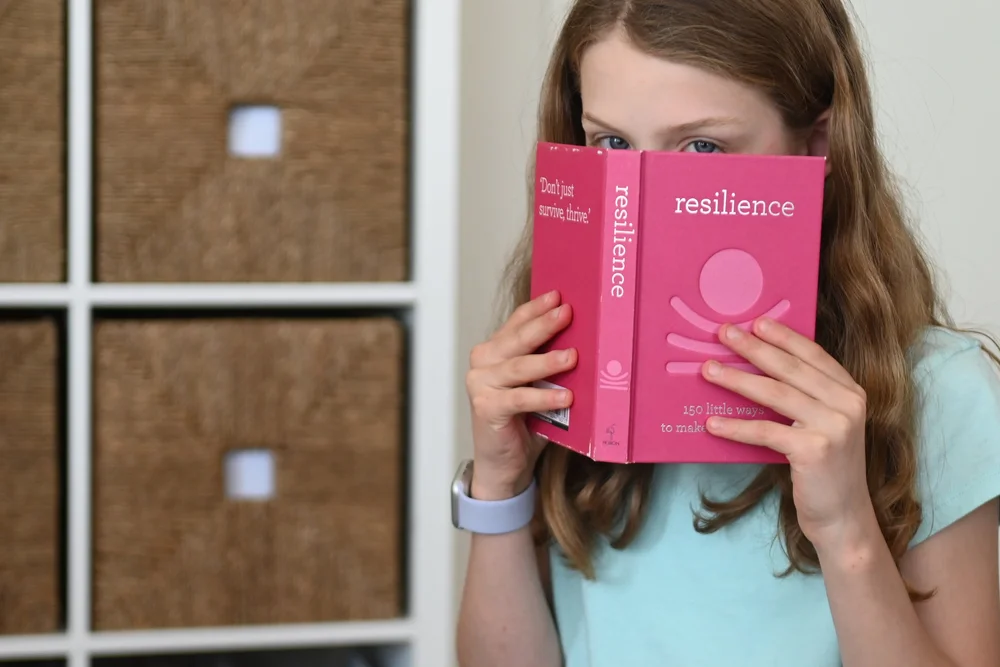
Understanding Resilience
What Is Resilience, Really?
Resilience is not being unbothered. That's the first thing worth clearing up, because it's the version most of us are carrying around — the child who loses the game and shrugs, the one nothing seems to touch. That child isn't necessarily resilient. They might just not care much, or they might have learned to hide it well. Resilience is the capacity to be genuinely knocked over by something and get back up. The being knocked over is not the failure. It's the first half.
It's also not a fixed quantity your child either has or doesn't. It moves — with sleep, with load, with how much is already on them, and with the setting. The same child can be unshakeable at hockey and fall apart over homework, which confuses parents enormously and is completely normal. Most importantly, it's built rather than born, which means it can be built now. At Creative Sky Psychology, our Calgary child psychologists help children develop the skills that make hard things survivable — from managing big emotions to genuine confidence — and help families get the balance right between stepping in and standing back.
Why Getting Up Is So Hard
What a setback feels like from in there.To you it's a bad afternoon that will be forgotten by Thursday. To your child it isn't an event at all — it's information about who they are, and the verdict came in fast.
- The setback doesn't stay a setback. It becomes proof
- The feeling arrives far too big to think through, so thinking stops
- They've no evidence they can survive this, because they never have
- Last time is right there, and it ended badly
- The future arrives fully formed and catastrophic within seconds
- Quitting isn't giving up. It's the only exit they can see
What Actually Builds It
The myth of the crucible.We're told hardship makes children strong. It's half right, and the missing half is the entire mechanism — which is why so much well-meant advice quietly backfires.
- Struggle on its own doesn't build resilience. It often just teaches "I can't"
- Struggle with someone steady beside them builds it, reliably
- The active ingredient isn't the hardship. It's coming through it
- So the difficulty has to be sized right — stretching, not crushing
- One committed adult is the most consistent factor in the research
- Rescuing removes the lesson. Withdrawing removes the support. Neither works
Which is genuinely freeing, because it means you're not choosing between rescuing your child and abandoning them to it. The job is smaller and much more doable: stay close, let the hard thing happen, and be there when they come out the other side. That's not coddling. That's the mechanism — and it's the part every "just let them struggle" lecture leaves out.
What Builds Resilience
It's Made of Parts You Can Actually Build.
Resilience isn't one mysterious quality some children were handed. It's an assembly of fairly ordinary things — and every one of them can be taught, practised, or provided. Not a single item on this list is personality.
One Steady Adult
The most consistent finding in the whole field, and the least glamorous. Not a perfect adult. Just one who keeps showing up — which is very likely already you.
Words for the Feeling
A child who can name it can begin to manage it. An unnamed feeling is just weather happening to them, and weather can't be reasoned with.
A Way Back Down
Recovering isn't willpower, it's a skill — and a nervous system that's learned the route down will take it faster each time.
More Than One Story
"I'm rubbish at this" and "that was hard and I'm new at it" describe the same afternoon. Only one of them leaves a door open.
Proof They've Done It Before
Every hard thing survived goes on the pile. Enough of a pile and a setback stops being a verdict — it's just Tuesday, and Tuesdays end.
Something Hard to Do
You can't build this in a life with no friction. The skill isn't removing the hill — it's picking one they can climb, and standing at the bottom while they do.
Age-Specific Resilience Support
Resilience Looks Different at Every Age
The ability to cope with setbacks builds slowly across childhood, so our Calgary child psychologists tailor resilience support to your child's stage. It's worth reaching out when setbacks knock your child flat — falling apart over small things, giving up quickly, avoiding anything hard, big reactions to mistakes or losing, or leaning on you to rescue them. Here's the part that surprises many parents: resilience isn't about toughening up or coping alone. It's built by getting through hard things with someone in their corner — and that's exactly what this work helps grow.
Preschoolers
Ages 3–5
For little ones, resilience starts with coping with small frustrations — waiting, sharing, not getting their way, or a tower that falls down. We build it through secure connection and gently letting them struggle with support nearby, and coach you on when to help and when to cheer them on.
School-Age Children
Ages 6–12
Now setbacks get bigger — failing a test, losing a game, a friendship falling out — and some children conclude they simply can't cope. We build coping tools and a growth mindset, helping them see mistakes as how brains grow and that "I can't" often just means "not yet."
Teens
Ages 13–17
Teens face real disappointment, rejection, and pressure right as they're stepping toward independence. We help them manage stress, learn from failure rather than be crushed by it, and build the self-belief that they can handle hard things — the foundation of lasting resilience.
What to Expect
What Resilience Support Actually Looks Like
We can't — and wouldn't want to — protect a child from every hard thing. Resilience doesn't come from avoiding difficulty; it comes from moving through it and discovering you're okay. So our work helps your child build the skills and belief to do exactly that. Here's how it usually unfolds at our Calgary clinic.
Understanding Where They Get Stuck
The first sessions look at what tends to knock your child flat, and the belief underneath it — often "I can't handle this." We also gently notice the rescue patterns that have understandably built up, since sometimes our love to protect quietly gets in the way of growth.
Building Coping and a Growth Mindset
Next your child learns to sit with discomfort, calm big reactions, and reframe failure as information rather than proof they're not good enough. Small shifts — like adding "yet" to "I can't do this" — help them see ability as something that grows with effort, not a fixed verdict.
Practising Brave Steps
Because resilience is built through experience, we help your child take on manageable challenges and discover they can cope, recover, and try again. Each success becomes real evidence that hard things are survivable — which matters far more than any reassurance we could offer.
Confident and Capable
Over time, your child bounces back more quickly, attempts more, and leans on rescue less. We also coach you on supporting without stepping in too soon — being the steady presence beside them rather than the safety net that removes the challenge. We're honest when they're ready to carry on without us.
How We Help
How We Help Children Get Back Up.
We're not in the business of toughening children up. That approach has a long history and a poor record — it mostly produces children who've learned to hide how they're doing, which looks like resilience from a distance and isn't. We're also not going to remove every hill from your child's life, because the hills are where this gets built. What we do sits in between, and it's more practical than either.
Our Calgary child psychologists teach the actual skills — naming what's happening, finding the way back down, noticing that "I'm rubbish at this" is a thought rather than a finding. Then we help your child take on something genuinely hard, at a size they can manage, and stay in it long enough to come out the other side, because that experience is the thing that does the work. And we help you with the judgement call nobody prepares you for: when to step in, and when to stand close by and let them.
- Teach the skills underneath — naming it, settling it, and thinking again afterward.
- Size the challenge so it stretches your child rather than flattening them.
- Build a pile of evidence they can actually point to next time.
- Help them stay in something hard long enough to find out it ended.
- Coach you on the hardest call in parenting: step in, or stand close?
- Check whether something else is making everything harder than it should be.

Resilience Support in Calgary & Across Alberta
Helping Children Build the Skills to Get Through Hard Things
Creative Sky Psychology provides resilience support for children and teens from our Calgary clinic, along with secure virtual appointments for families across Alberta. Whether your child quits the moment something gets difficult, unravels over a setback other kids seem to shrug off, can't get going again without you carrying them, or has started avoiding anything they might not be good at, our child psychologists help build the skills that make hard things survivable — and help you find the line between stepping in and standing close by, which is a genuinely difficult call that nobody hands you a manual for.
Neighbourhoods We Serve
- Aspen Woods
- West Springs
- Cougar Ridge
- Springbank Hill
- Wildwood
- Glenbrook
- Glendale
- Westgate
- Mount Royal
- Royal Oak
Virtual Resilience Support Across Alberta
Families throughout Alberta can access resilience support through secure online appointments. It suits this work particularly well, because almost none of it happens in a session — the hard things are the hockey tryout, the group project, and the Tuesday that fell apart, and those are all happening at home. Sessions plan the next step and make sense of the last one, and much of the value is in coaching parents through the moment itself. That works just as well from anywhere in the province.
Explore All Areas We ServeUnderstanding Your Child
What If It Isn't Resilience at All?
Here's a possibility worth taking seriously: a child who seems to crumble at everything is sometimes a child who is already at capacity. Reading is genuinely impossible for them and nobody's found the learning difference. Their attention runs out by 10am and it's never been looked at. Anxiety is using every resource they have, so there's nothing left over when something goes wrong. From the outside all of that looks like fragility — and the advice they get is to try harder, which is precisely the wrong prescription for a child who is already trying hardest. A comprehensive assessment can tell you whether your child is short on resilience or simply carrying a load nobody has counted. Those need completely different things, and the difference matters enormously to your child.
Resources
Explore Our Blog
Helpful articles about building resilience in children, why "let them struggle" is only half the advice, what to do when your child quits everything, the difference between rescuing and supporting, and practical ways parents can help a child get back up without carrying them there.
Read Our Articles
Our Team
Meet the Psychologists Behind Creative Sky
Our Calgary child psychologists bring diverse backgrounds, advanced training, and a shared commitment to thoughtful, evidence-informed care for children and families.
This work is mostly about relationships, which makes the person doing it the whole ballgame. We'll help you find the psychologist your child actually connects with — one whose expertise, personality, and approach feel like the right fit for them and for your family.

Resilience FAQs.
Aren't Kids Just Less Resilient Than They Used to Be?
It's a fair thing to wonder, and the honest answer is more complicated than either side of that argument admits. Some things have genuinely changed: children have less unsupervised time to solve their own problems, more comparison than any previous generation had access to, and a culture that's better at noticing distress than it used to be. That last one matters — some of what looks like a rise in fragility is a fall in stoicism, and we should be careful about calling that a decline.
What we'd push back on is the conclusion people draw from it. Even if the diagnosis were right, "toughen them up" doesn't follow from it, because that isn't how resilience was ever built — not now, and not in the generation doing the complaining. Their resilience, where it exists, came from getting through hard things with someone around. If children today have less of it, the answer is more of what actually builds it, not nostalgia for a childhood that was mostly just quieter about suffering.
Should I Let My Child Quit?
Sometimes, yes — and the blanket rule that nobody quits anything isn't doing what parents hope. The useful question is what they're quitting for. Wanting to stop because it's hard right now, mid-season, on a bad Tuesday, is worth not indulging: leaving at the low point teaches that low points are exits. But wanting to stop because they've given it a genuine go and it isn't for them is just information, and honouring that isn't weakness.
A decent middle path is to finish the unit — the season, the term, the recital — and then decide, when the decision isn't being made by the feeling. That way they learn they can stay in something uncomfortable, and they still get a say over their own life. What you're protecting isn't the activity. It's the experience of having stuck at something long enough to find out how it ends.
Where's the Line Between Supporting and Rescuing?
The clearest test we know is this: rescuing removes the hard thing, supporting makes the hard thing survivable. Emailing the teacher to get the deadline moved is rescuing. Sitting next to them while they write the email is supporting. Same problem, same worry, entirely different lesson — one says "this was too much for you," the other says "that was hard and you did it."
Two practical notes. First, the line moves — a step that's supportive at seven is rescuing at thirteen, so it should keep shifting as they grow. Second, if you get it wrong, you'll get it wrong in a loving direction, and one over-helped afternoon isn't going to define your child. The parents who agonize over this question are almost never the ones getting it badly wrong. Aim for slightly less help than feels comfortable, and you'll be about right.
Why Are They Resilient at Some Things and Not Others?
Because resilience isn't a single tank they draw from. It's specific to the situation, and it depends on three things: how much they've already got on, whether they've got evidence they can do this particular thing, and how much of themselves is riding on it. A child can take a brutal loss on the ice and be destroyed by a spelling test, and that's not inconsistency — it's just that one of those is attached to their identity and the other isn't.
It also runs down. Resilience is heavily affected by sleep, hunger, illness, and how much a child has been holding together all day. The same setback lands very differently at 8am and 5pm, which is why so many families see the whole thing collapse right before dinner. That's not your child being fragile. That's a depleted nervous system, and it refills.
Does Playing Sport Build Resilience?
It can, beautifully — and it depends almost entirely on the adults. Sport offers the exact recipe: something genuinely hard, repeated failure, a team, and a coach who might be that one steady adult. Plenty of children get more resilience out of a season than out of anything a psychologist could offer them.
But it isn't automatic, and it's worth being clear-eyed about that. The same season under a coach who humiliates kids, or in a program where a nine-year-old's worth is their performance, builds something else entirely — usually perfectionism and a quiet decision to stop trying. The hardship isn't the active ingredient. It never was. What matters is whether there's someone in your child's corner while it's hard. If that's there, sport is one of the best things going. If it isn't, it's just difficulty.
My Child Says They're Bad at Everything. What Do I Say?
Not the list. The instinct is to produce evidence — you're great at art, remember the goal you scored — and it never lands, because you're arguing with a feeling using facts, and they'll simply out-argue you with counter-examples. Now you've had a debate about whether your child is worthless, which is not the conversation you wanted.
Start by agreeing with the part that's true: "that was a genuinely rubbish afternoon." Then, later, when the storm has passed, be curious rather than corrective — was it everything, or was it maths? Was it always, or was it today? You're not talking them out of the feeling. You're helping them notice that "I'm bad at everything" is a thought that arrived, rather than a fact they discovered. That distinction is most of the skill.
Is It Too Late? They're Already a Teenager.
No. Adolescence is one of the most changeable periods in the whole of development — the brain is rewiring itself substantially, which is exactly why teenagers feel everything so hard and also why this is a genuinely good moment to build. What changes isn't whether it's possible. It's the route: teenagers won't be taught this by a parent explaining it, but they'll absorb it from experience, from peers, and often from an adult who isn't you.
The thing worth holding onto is that the most powerful ingredient is still available to you, and it doesn't require them to be receptive. One committed adult who keeps showing up, through the eye-rolling and the closed door, is doing the work whether or not it's being acknowledged. It rarely feels like it's landing at the time. It lands.
When Is This Worth Getting Help For?
When your child's world is getting smaller. Setbacks that sting and pass are ordinary and don't need us. What's worth attention is avoidance that's growing — the activities dropped, the things not attempted, the shrinking list of situations where they're willing to risk anything. That pattern doesn't usually correct itself, because every avoided thing confirms that avoiding worked.
It's also worth reaching out if you suspect this isn't really about resilience at all. A child who falls apart at everything is sometimes a child at capacity — carrying an undiagnosed learning difference, unrecognized anxiety, or attention difficulties nobody has looked at. If that's the case, more encouragement is the wrong medicine, and finding out is the kindest thing you can do. One conversation is usually enough to know which one you're dealing with.
Take the First Step
Your Child Doesn't Have to Do It Alone.
Everyone's told you to step back and let them struggle, and you've watched that not work, and quietly wondered whether you're the problem. You're not. The choice was never between rescuing your child and leaving them to it — that's a false choice, and it's why the advice has felt so wrong. Our Calgary child psychologists help children build the skills that make hard things survivable, take on something difficult at a size they can actually manage, and collect the proof that they got through it. And we help you find your place in that: close enough to matter, far enough back that the win is theirs. The most powerful thing in the research is one adult who keeps showing up. You've already got that part covered.