
Sibling Conflict Support for Families in Calgary
They Fight Now. It Doesn't Mean They'll Grow Apart.
The fighting that starts before breakfast and doesn't really stop. The referee role you never applied for and can't put down. The child who swears the other one started it, every time, with total conviction. And underneath the noise, the quiet worry that keeps you up: is this normal, or are they going to grow up hating each other?
Here's the reassuring part. Some conflict between siblings isn't a problem to solve — it's how children learn to argue, share, back down, and make up with someone they can't walk away from and don't have to win over. A sibling is the first place many people practise conflict in relative safety. But there's a line, and it's a real one: when one child is consistently frightened of another, when the household organizes itself around avoiding an explosion, or when one child has quietly become the problem in everyone's eyes, that's no longer ordinary rivalry. At Creative Sky Psychology, our Calgary child psychologists help families tell the difference — and turn the daily war into something more livable.
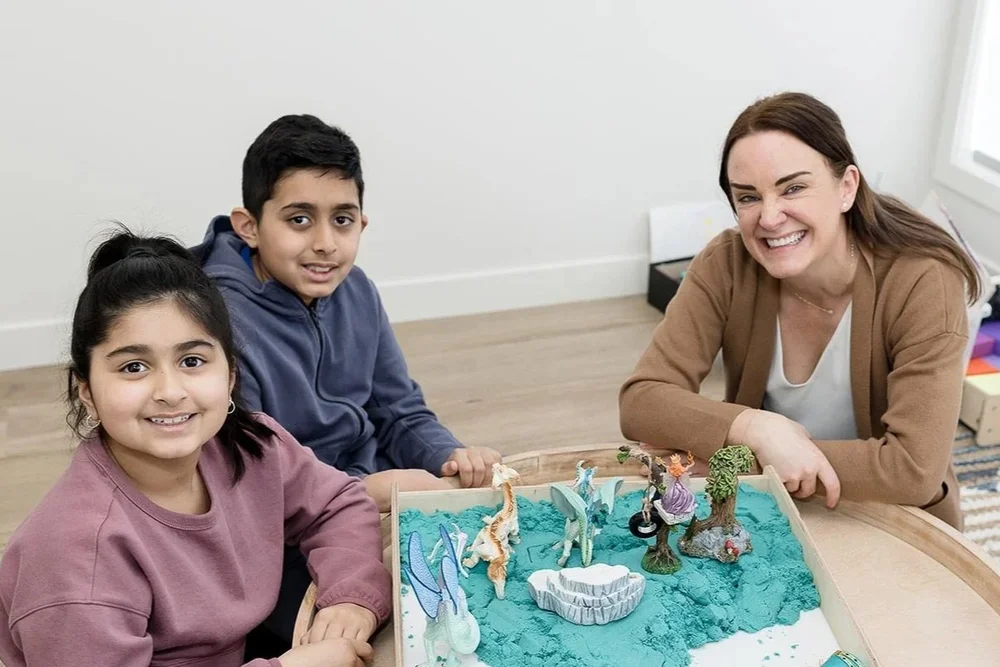
Understanding Sibling Conflict
When Is It Normal, and When Is It Not?
Start with the reassuring truth: a great deal of sibling fighting is completely normal and even useful. Siblings are the one relationship children can't quit and don't have to impress, which makes it the safest place on earth to practise conflict — arguing, losing, apologizing, and discovering that the relationship survives it. Bickering, competing, and the occasional slammed door are the sound of that practice happening. They are not evidence that anything has gone wrong.
The line isn't about how loud it gets or how often. It's about safety and balance. Ordinary conflict goes back and forth — each child wins some, both give as good as they get, and it blows over. What's worth attention is when it stops being mutual: when one child is genuinely afraid of another, when the aggression is one-directional and relentless, when a child is being excluded or humiliated rather than simply argued with, or when the whole household has quietly reorganized itself to keep one child from erupting. That's not rivalry anymore, it doesn't resolve on its own, and it's exactly where family therapy can help.
What They're Actually Fighting Over
It's rarely the thing they're fighting over.The argument is about the remote, the seat, the last biscuit. It's almost never actually about those. Underneath the specific war is usually the same handful of questions, asked over and over.
- Am I loved as much as they are — and can I prove it by winning?
- Fairness is the language; being valued is the real subject
- A child who feels secure shares more easily, because less is at stake
- Attention counts even when it's negative — a fight still gets them you
- Some are fighting for territory in a house that feels short on it
- Solve the biscuit and another biscuit appears tomorrow. The question stays
How One Child Becomes "The Problem"
The role nobody handed out on purpose.Here's the pattern families rarely see from inside it: over time, one child can quietly become the identified troublemaker — and the label starts doing its own damage.
- One child reacts more loudly, so they're the one who gets caught
- The quieter one learns exactly which buttons to press, invisibly
- Adults arrive mid-explosion and see only the explosion
- The "difficult" one is punished; the provoker looks innocent
- Over time the label sticks, and the child starts living up to it
- Now you have a scapegoat and a hidden instigator, and both are stuck
Almost every sibling war is a competition for something that feels scarce: your attention, your approval, a sense of being the favourite, or simply enough room to be themselves. Neither child is bad, and neither is the problem. When families stop refereeing who started it and start addressing what each child is actually reaching for, the fighting tends to lose most of its fuel.
When It's Crossed a Line
Ordinary Rivalry Doesn't Look Like This.
Most sibling fighting is loud, mutual, and forgotten by dinner — and needs nothing from us. These are the patterns that suggest it's become something else: not a phase to wait out, but a dynamic worth a hand with.
It Only Goes One Way
Ordinary rivalry is a back-and-forth where both give as good as they get. When it's always the same child on the receiving end, it isn't rivalry anymore.
One Child Is Actually Afraid
Genuine wariness, flinching, staying out of a room to avoid the other. Fear between siblings is the clearest line there is, and it's worth acting on.
The Whole House Walks on Eggshells
Plans, meals, and moods all bend around keeping one child from erupting. When a household organizes itself around avoiding a blow-up, that's the sign.
One Has Become "The Problem"
The same child is always in trouble, always the cause, always the difficult one. When a family has a designated culprit, the story is usually incomplete.
It's Getting Physical and Nobody's Stopping
Hitting that leaves marks, or that a child can't pull themselves out of. Rough-and-tumble is fine; aggression that keeps escalating past every limit is not.
The Cruelty Is Personal
Not squabbling over a toy — targeting the soft spots: the insecurity, the diagnosis, the thing they know will land. When it's aimed to wound, it's crossed over.
Age-Specific Sibling Conflict Support
Sibling Conflict Looks Different at Every Age
Some conflict between siblings is completely normal — even useful practice for life — but how it shows up changes with age, and our Calgary child psychologists tailor support accordingly. It's worth reaching out when the fighting has gone beyond ordinary bickering: one-sided aggression, real fear, relentless conflict that's worn everyone down, one child cast as "the problem," or a household reorganized around keeping the peace. The goal isn't to end all fighting. It's to ease the patterns that are one-sided, frightening, or slowly damaging the relationship — and often a few sessions with parents shift a dynamic that's felt stuck for years.
Preschoolers
Ages 3–5
Grabbing, hitting, and jealousy — especially around a new baby — are developmentally normal here, since little ones can't yet share or regulate on their own. We help them build those skills through play and co-regulation, and coach you on responding in ways that calm rather than fuel the clash.
School-Age Children
Ages 6–12
Now it's rivalry, fairness battles, tattling, and "who started it" — and roles can start to harden into a fixed troublemaker and a fixed victim. We teach real conflict-resolution skills, help you step out of the referee chair, and protect the connection underneath the competition.
Teens
Ages 13–17
Teen conflict can turn into contempt, withdrawal, or deep resentment that risks setting for years. We work on communication and repair, address whatever's feeding it underneath, and help siblings find a workable, more respectful relationship as they head toward adulthood.
What to Expect
What Sibling Conflict Support Actually Looks Like
Much of this work happens with parents rather than the children — because the fastest way to change how siblings treat each other is often to change what happens around them. This isn't about assigning blame; it's about shifting a pattern everyone's caught in. Here's how it usually unfolds at our Calgary clinic.
Understanding the Dynamic
The first sessions look at what's really driving the conflict — ordinary rivalry, a big change like a new baby or a move, one child's struggle spilling over, or a sense of unfairness that's taken hold. Seeing the pattern clearly is what shows us where to gently intervene.
Stepping Out of the Referee Role
We coach you out of the exhausting job of deciding who started it, which usually fuels more fighting, and toward responses that hold everyone to fairness. A big focus is making sure no child becomes the permanent villain or the permanent victim — roles that can otherwise last for decades.
Building Skills and Connection
Where it helps, we work directly with your children on managing big feelings, resolving disagreements, and repairing after a fight. Alongside reducing the conflict, we actively nurture the warmth between them, because a stronger bond is what makes the fighting matter less.
A Calmer, Warmer Home
Over time, the flashpoints ease, safety improves, and the relationship between your children steadies and softens. If aggression has been a real concern, we keep that front and centre throughout. We check in with you regularly and are honest when your family is ready to carry on without us.
How We Help
How We Help Bring the Peace Back.
We don't sit two children down to work out who started it — that's the referee role you're already exhausted from, and it rarely helps, because whoever gets the last word simply learns to fight better next time. We start somewhere more useful: what is each child actually reaching for, and what is the household accidentally rewarding? Sibling conflict is a system, not a villain, and systems can be changed.
Much of the work is with you, because parents are the ones who can shift the whole dynamic — how attention gets shared, how fairness gets handled, how a fight gets responded to in the moment. Alongside that, our Calgary child psychologists help each child directly: the one who erupts to find another way through the feeling, the one who's frightened to feel safe again, and the one who's quietly become "the problem" to step out of that role before it hardens into who they think they are.
- Work out what each child is really fighting for, underneath the biscuit.
- Get you out of the referee role, which quietly fuels the very thing it's stopping.
- Help the child who erupts build the regulation skills the fights keep exposing.
- Make sure a frightened child is genuinely safe, first and above everything.
- Lift the label off the child who's become "the difficult one."
- Give the whole family a calmer way to handle the fight when it happens.
Sibling Conflict Support in Calgary & Across Alberta
Helping the Whole Household Find Its Way Back to Calm
Creative Sky Psychology provides sibling conflict support for families from our Calgary clinic, along with secure virtual appointments for families across Alberta. Whether the fighting has simply worn everyone down, one child is genuinely afraid of another, the house has started organizing itself around avoiding a blow-up, or one child has quietly become "the difficult one," our child psychologists help you understand what's really going on beneath the noise — and help each child, and the family as a whole, find a steadier way to live together.
Neighbourhoods We Serve
- Aspen Woods
- West Springs
- Cougar Ridge
- Springbank Hill
- Wildwood
- Glenbrook
- Glendale
- Westgate
- Mount Royal
- Royal Oak
Virtual Sibling Support Across Alberta
Families throughout Alberta can access support through secure online appointments — and this work is a particularly good fit for video, because so much of it is with parents rather than in a playroom. The fights happen at your kitchen table and in the back seat, not in our office, and a great deal of what shifts them is coaching you through how attention, fairness, and the flashpoints get handled at home. That travels anywhere in the province, and it's often easier than trying to get warring siblings into the same car.
Explore All Areas We ServeWhen One Child Keeps Reaching the Edge
Sometimes the Fighting Is a Clue
When one child seems to combust over the smallest thing, or lands in every conflict no matter how the day started, it's worth asking whether the fighting is telling you something. A child who goes from zero to a hundred is often a child whose brakes aren't fully built yet — and sometimes that's ADHD, anxiety running hot, a sensory system that's constantly overloaded, or a way of processing the world that makes a busy, unpredictable sibling genuinely hard to be near. None of that makes a child "the difficult one." It means the home is asking something of them they can't yet do, and the sibling relationship is simply where it shows. An assessment can make sense of what's underneath, so the support fits the actual child rather than the label they've picked up — and so the whole household gets some relief.
Resources
Explore Our Blog
Helpful articles about sibling relationships — how much fighting is normal, what to do instead of refereeing, the "who started it" trap, protecting the child who's become "the difficult one," and helping siblings who genuinely can't get along.
Read Our Articles
Our Team
Meet the Psychologists Behind Creative Sky
Our Calgary child psychologists bring diverse backgrounds, advanced training, and a shared commitment to thoughtful, evidence-informed care for children and families.
Sibling work means holding more than one child's side at once, without taking sides — and doing that well takes a particular kind of psychologist. We'll help you find the one who fits your family, whose expertise, personality, and approach feel right for each of your children and for you.

Sibling Conflict FAQs.
How Much Fighting Is Actually Normal?
Far more than most exhausted parents believe. Researchers who've actually counted find young siblings can clash multiple times an hour, and the average is startlingly high. If your children fight a great deal, you are not failing, and they are not unusually awful — you're hearing the ordinary volume of two people learning to share a life.
The number that matters isn't frequency, it's the shape of it. Fighting that's mutual, blows over, and sits alongside genuine affection — playing together, defending each other to outsiders, seeking each other out — is healthy, however loud. What's worth attention is fighting that only ever goes one way, that involves real fear, or that has crowded out every warm moment between them. Loud isn't the problem. One-sided and frightening is.
Should I Step In or Let Them Work It Out?
Mostly, let them — with two firm exceptions. Every time you swoop in to settle an ordinary squabble, you rob them of the exact practice the squabble exists to provide: negotiating, backing down, repairing. Children who are always refereed never learn to referee themselves, and they quickly work out that summoning you is easier than sorting it out. Constant intervention doesn't reduce fighting; it trains children to fight louder to fetch you.
The exceptions are non-negotiable. Step in immediately if anyone's being hurt or is genuinely frightened — safety is never something children should "work out." And step in if it's not a fair fight, where one child consistently overpowers the other, because leaving that to sort itself out just lets the stronger one win. For everything in between, a good default is to stay out, or to coach from the sidelines rather than judge from the bench.
Is This Because I Have a Favourite?
Probably not in the way you're afraid of. Almost every parent feels more in sync with one child at a given moment — they're easier that season, or more like you, or simply going through a gentler phase — and that's human, not a betrayal. What matters far less is whether you feel it and far more is whether children experience day-to-day fairness in attention, warmth, and how conflicts get handled.
Here's the twist worth knowing: children keep a ferociously precise ledger, and they'll read "favouritism" into things you never intended. The child who's disciplined more (often the one who reacts more loudly) can conclude they're loved less, even when they aren't. So the useful move isn't tortured even-handedness or guilt — it's noticing whether one child has quietly become the one who's always in trouble, and making sure each child gets unhurried, one-to-one time that isn't about behaviour. Fair doesn't mean identical. It means each child getting what they need.
How Do I Get Out of the "Who Started It" Trap?
Stop trying to solve it, because it has no solution. "Who started it" is a trap by design: you weren't there, both children are certain and sincere, and whichever way you rule, you've just taught the winner that the game is worth playing and the loser that you're unjust. Detective work at the scene of a sibling fight is a job you cannot win and shouldn't accept.
What works better is treating the pair as a unit and the fight as a shared event. "I don't need to know who started it — you're both finding this hard, so the tablet goes away and you can both try again in twenty minutes." It feels rough on the "innocent" one, but it removes the entire incentive to provoke-then-report, which is what the quieter child has often been doing. You're not judging the argument. You're stepping out of the referee role that keeps the argument profitable.
One of My Children Says They Hate the Other. Should I Worry?
Usually not, though it lands like a gut-punch to hear. "I hate her" from a furious eight-year-old almost always means "I am overwhelmed right now and she is the reason," and it evaporates by teatime when they're building a fort together. Big feelings need big words, and children reach for the biggest one available. Meeting it with horror ("don't ever say that about your brother!") tends to teach concealment rather than change the feeling.
What helps is accepting the feeling while holding the line on behaviour: "you're really angry with him right now — that's allowed, and you still can't hit him." The feeling is information, not a verdict on the relationship. Where it's worth a second look is if the hatred is constant rather than in-the-moment, if there's no warmth left between them at all, or if it's paired with genuine fear. A feeling that never softens is different from a feeling shouted in a storm.
Will They Grow Up to Be Close, or Is This Permanent?
Childhood fighting is a genuinely poor predictor of the adult relationship, which should be a relief. Plenty of siblings who scrapped constantly become devoted adults once they're no longer sharing a bathroom, a back seat, and their parents' finite attention. A lot of the friction is simply the friction of proximity, and it eases the moment the proximity does.
What does shape the long game isn't whether they fought, but what the fighting taught them — and that part you can influence. Siblings who learned that conflict can be repaired, that neither of them was the permanent villain, and that their parents didn't pit them against each other tend to carry a workable relationship into adulthood. Siblings who grew up with a fixed hero and a fixed scapegoat often carry that casting for decades. You can't make them close. You can avoid building the thing that keeps them apart.
My Kids Are Very Different Ages or Stages. Is That the Issue?
It often is, and it's worth naming because it takes the blame off both children. A big age gap, or two children at very different developmental stages, means they genuinely want different things from the same house at the same time — one needs quiet and independence, the other needs to be included in everything. That's not a personality clash; it's a logistics problem wearing the costume of one.
Temperament does the same. A fast, intense, easily-flooded child and a sensitive, easily-overwhelmed one aren't fighting because either is bad — they're a poor sensory match sharing close quarters. And if one child has ADHD, autism, anxiety, or another difference, ordinary sibling life can be genuinely harder for them to manage. Understanding what each child actually needs, rather than expecting them to want the same things, resolves a surprising amount without anyone having to change who they are.
When Should We Get Help?
Ordinary bickering, however relentless, doesn't need us — time, patience, and staying out of the referee chair handle most of it. It's worth reaching out when the pattern has crossed into something that isn't resolving on its own: when one child is genuinely afraid of another, when the aggression is one-sided and escalating, when the household has reorganized itself around avoiding a blow-up, or when one child has become the family's designated problem.
It's also worth a conversation if the fighting is clearly a symptom rather than the whole story — flaring since a divorce, a move, or a new baby, or driven by one child's difficulty regulating that shows up everywhere, not just with their sibling. And honestly, reach out if it's simply grinding your family down. You don't have to wait for a crisis to want a calmer house. Often a few sessions with the parents is enough to shift a pattern that's felt immovable for years.
Take the First Step
You Don't Have to Referee Forever.
The constant fighting is wearing you down, and you're allowed to want a calmer house without waiting for it to become a crisis. There's no villain here to catch — just two children reaching for the same things and a pattern that's dug itself in. Our Calgary child psychologists help you understand what each child is actually fighting for, step out of the referee role that keeps it going, and lift the "difficult one" label off whichever child has ended up wearing it. It won't turn them into best friends overnight, and it doesn't need to. It just needs to become a home everyone can breathe in again — and that's genuinely within reach.